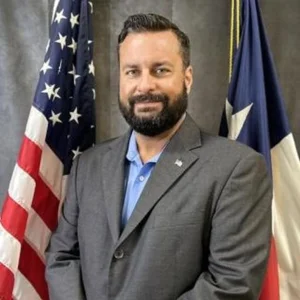
To A Better Place with Bobby Quinten
Leadership rarely improves by accident.
It improves when leaders slow down long enough to listen, reflect, build trust, and become more intentional about how they show up for the people around them.
In this episode of The Clear Voice, James Groom speaks with Bobby Quinten, a certified coach and executive leadership development professional who helps leaders strengthen culture, performance, and communication through To A Better Place Executive Coaching.
Bobby brings experience from corporate leadership development, human resources, training, coaching, municipal departments, federal agencies, nonprofit service, and Kiwanis leadership. That mix gives him a broad view of what leaders face across sectors, but one of his central observations is simple, people are people. Whether the setting is corporate, public sector, nonprofit, or volunteer service, many leadership challenges come back to trust, communication, emotional intelligence, culture, and purpose.
Coaching Is Not Training or Mentoring
One of the key distinctions Bobby makes is that coaching is different from training or mentoring.
Training usually teaches a specific skill. Mentoring often involves someone saying, “I have been where you are, and here is what I did.” Coaching creates space for the client to step away from the whirlwind, think through challenges, explore options, and decide what their better place looks like.
That distinction matters because many leaders do not need another lecture. They need focused time to think, talk, process, and become more intentional about what comes next.
Bobby describes strong coaching as client centered. The coach helps the leader explore what is happening, what needs to change, what options exist, and what action steps make sense. Sometimes the most valuable moment is when the leader reaches their own answer because someone finally gave them the space to talk it through.
Emotional Intelligence and Leadership Credibility
Bobby and James discuss how much leaders can learn from both good leaders and bad leaders. Good leaders model what to do. Bad leaders often reveal what happens when intelligence, title, or authority are not balanced with emotional control.
Bobby notes that a leader may be the smartest person in the room, but if they cannot regulate their emotions, treat people with respect, and make thoughtful decisions, people may respect their intelligence without respecting them as a leader.
Emotional intelligence is not about never getting upset. It is about self awareness, self regulation, and understanding the impact a leader’s reactions have on others. Leaders who lose control, make impulsive decisions, or disrespect people damage trust quickly.
For public sector leaders, department heads, and city managers, this becomes even more important because the work is already complex, stressful, and visible. A leader’s emotional discipline can either stabilize the organization or make an already difficult environment worse.
Work Life Balance and Burnout
Bobby also talks openly about one of his own leadership challenges, work life balance.
He describes himself as someone who is “all in” when he commits to something. That drive helped him build a strong career and serve in major volunteer leadership roles, but it also came with a cost. Over time, being all in can affect health, family, relationships, volunteer service, and long term effectiveness.
The conversation connects that issue to local government leadership, where driven people often carry heavy workloads because they care deeply about the mission. The problem is that organizations frequently reward high performers by giving them more and more work until they burn out.
Bobby’s advice is practical. Leaders have to model balance themselves. Team members need to see leaders leave for family obligations, take care of their health, and create permission for others to do the same. Leaders also need to check in with people as human beings, not just as task owners.
A better check in is not only, “Where are we on this project?” It is also, “How are you doing?” and “What can I do to help?”
Trust Starts with Human Leadership
Trust is a major theme throughout the episode.
Bobby explains that trust is built over time through credibility, consistency, respect, compassion, and follow through. People need to see that leaders do what they say they will do. They also need to see that leaders respond like human beings when life happens.
If an employee calls because their child is in the emergency room, the first question should not be, “When are you coming in?” It should be, “What happened, how are they, and how can I help?”
Those moments matter. They either build trust or withdraw from what Bobby calls the trust bank account.
James and Bobby also discuss the importance of admitting mistakes. Leaders who cannot acknowledge when they were wrong lose credibility. Leaders who own mistakes, apologize when needed, and fix the issue often gain respect because everyone already knows the mistake happened anyway.
Active Listening Is a Leadership Skill
Active listening is another area where Bobby says leaders can make major progress.
Many leaders listen just long enough to answer. They believe they already know the solution before the person is done explaining the problem. Sometimes they may be right, but often the full context changes the answer.
Real listening gives the leader better information, but it also communicates respect. People feel valued when a leader gives them time and attention. In many cases, when a leader listens well, the person talking may solve their own problem before the leader ever gives advice.
That is one of the quiet strengths of good leadership. The leader does not always have to provide the answer. Sometimes the leader’s role is to create the space where the answer becomes clear.
Culture Change Requires More Than a Memo
When the conversation turns to culture, Bobby is direct. If the culture stinks, then change it.
But culture change does not happen because a leader sends an email, gives everyone a slogan, or hands out a mug. Culture change requires an honest look at where the organization is now, how it got there, what needs to be preserved, and what needs to change.
Bobby emphasizes that the people most affected by the culture must be part of the conversation. In policing, James notes that chiefs may set the vision, but sergeants and field training officers often determine whether that culture actually reaches the front line. Bobby agrees that this is true across sectors. Frontline leaders, supervisors, and informal influencers must become ambassadors of the culture.
A strong culture also has to outlast one leader. If the culture depends entirely on one chief, city manager, executive, or department head, it may disappear when that person leaves. A healthy culture becomes embedded in the organization.
Public Sector Leadership Comes with Unique Complexity
Bobby also reflects on the public sector from the perspective of someone who has worked with municipal and government clients.
His observation is that public sector leaders often have more constituencies to balance. A private sector executive may answer to ownership, customers, regulators, and internal stakeholders. A city manager or public sector leader must also navigate elected officials, residents, community groups, social media, service expectations, public safety, budgets, and legal requirements.
That complexity creates stress. It also requires leaders who are deeply committed to the community and the mission.
The conversation recognizes that many public sector leaders are not there for the money. They are there because they care about the work, the community, and the impact their organization has on residents, businesses, visitors, and employees.
Service Broadens a Leader’s Perspective
Bobby also shares how Kiwanis and service work have shaped his leadership.
He served in Kiwanis leadership and also spent years on the Mansfield Public Library Advisory Board. Those experiences gave him a deeper understanding of community work, city government, public service, and the many perspectives that shape local decisions.
His advice to leaders is to get outside the bubble. Service organizations, nonprofit boards, places of worship, and community groups can all help leaders see beyond their own building, department, or profession.
Bobby uses the phrase “massively inclusive” to describe the need to hear many perspectives. In this context, inclusion means actively listening to different viewpoints, different occupations, different experiences, and different community voices.
That broader view can make leaders more grounded, more connected, and more effective.
Lean Into Strengths
Near the end of the conversation, Bobby highlights the importance of understanding and using personal strengths.
As a certified strengths coach, Bobby encourages leaders to identify what they do well and build from that foundation. Development should not focus only on weaknesses. Leaders bring the most value when they understand their strengths, sharpen them, and place themselves in situations where those strengths can serve the team and the mission.
Weaknesses still have to be managed, but strengths are where leaders often create their greatest impact.
Change Is Possible
One common blind spot Bobby sees in coaching is the belief that change is not possible.
Leaders may feel stuck, burned out, stressed, or convinced that nothing can improve. Coaching helps them step outside those thought patterns and begin looking at their situation differently.
That shift can create the light bulb moment. The leader realizes the situation can change, they have options, and they can take intentional steps toward something better.
That is the heart of Bobby’s work. Helping leaders, teams, and organizations move to a better place.
Connect with Bobby Quinten
Bobby Quinten is the founder of To A Better Place Executive Coaching. He works with leaders on coaching, culture, communication, performance, emotional intelligence, and leadership growth.
For a free 30-minute consultation, contact him at bquintentx@gmail.com.
About The Clear Voice Podcast
The Clear Voice is a dedicated platform for transparency and expert led dialogue within the professional and public sectors. The show serves as a vital resource for leaders who want to move past surface level discussions and dive into the real world mechanics of governance, management, and organizational growth. James Groom is the host of the program. As the Vice President of Clear Career Professionals and a retired Police Chief, James brings a unique, high stakes perspective to every conversation. His background in public service and executive leadership allows him to extract practical, actionable insights from industry experts that help modern organizations function with total clarity.
Our Core Focus Areas
Executive Leadership: Exploring the transition from technical competence to high level strategic management.
Organizational Transparency: Discussing the importance of open communication and accountability in public and private leadership.
Governance and Strategy: Breaking down the complex decision making processes that drive successful communities and organizations.
Professional Development: Insights on coaching, culture building, and high performance team management.
About Clear Career Professionals
Clear Career Professionals is a specialized recruitment and strategic consulting firm focused on the public sector. We believe that the strength of any municipality or school district lies in the quality of its leadership and the cohesion of its teams.Our team is comprised of former practitioners and retired executives who understand the nuances of public service. We provide organizations with more than just a list of candidates; we provide the strategic oversight and expertise necessary to navigate transitions, maximize taxpayer funds, and implement long term solutions.
Our Strategic Services
Executive Search and Recruitment: A tailored approach to identifying top tier talent for leadership roles in cities and school districts.
Interim Leadership: Providing experienced professionals to guide organizations through critical periods of transition.
Governance and Board Training: Specialized sessions designed to strengthen board relations and help leadership teams function as a unified School Board or City Council & Executive Team.
Shared Solutions Initiative: A program focused on fostering collaboration between municipalities and schools to address shared community challenges.
Connect With Us
Visit our official website to explore current job opportunities or to learn more about our leadership services: clearcareerpro.com.
Follow us for more updates:
Career Opportunities: https://clearcareerpro.com/career-opportunities/
Recruitment Services: https://clearcareerpro.com/recruitment/
Services: https://clearcareerpro.com/all-services/
Clear News: https://clearcareerpro.com/clear-news
The Clear Voice Podcast: https://clearcareerpro.com/the-clear-voice/
LinkedIn: https://linkedin.com/company/clear-career-pro
Facebook:Clear Career Professionals @ClearCareerPro