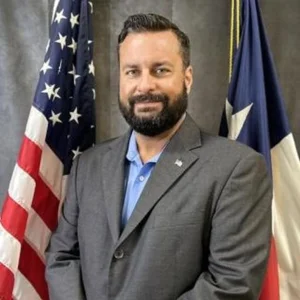
Building Strong Public Sector Teams with Cheree Bontrager
HR, Hiring, Retention, and Leadership in Local Government
Episode Summary
Episode 45 of The Clear Voice features a conversation with Cheree Bontrager, a veteran municipal human resources professional with more than two decades of public sector HR experience and more than 25 years in human resources overall.
In this episode, James Groom and Michael Boese talk with Cheree about municipal HR, resume and cover letter advice, interview preparation, hiring realities in local government, retention, employee engagement, public sector culture, and the role HR plays in helping departments serve their communities.
This episode is especially useful for city managers, department heads, HR professionals, job candidates, public sector employees, and local government leaders who want to build stronger teams and improve the candidate and employee experience.
Why This Matters for Local Government Leadership
Human resources is not just paperwork, compliance, benefits, and personnel rules. In local government, HR helps create the environment that allows employees to serve residents well.
Cheree explains that HR exists to give employees the tools, resources, and positive work environment they need to do their jobs effectively. That matters because every city service depends on people. Police, fire, public works, finance, parks, library services, utilities, planning, and administration all depend on employees who feel supported, valued, and equipped.
For local government leaders, strong HR is not separate from service delivery. It is one of the foundations of organizational performance.
The Role of HR as a Partner
One of the strongest themes in the episode is that HR should be viewed as a partner, not simply an enforcement office. Cheree explains that HR is there to help supervisors and department heads weigh difficult situations, understand options, and make sound decisions.
HR professionals are not there to tell police officers how to make arrests, firefighters how to put out fires, or public works crews how to repair a water main. Their role is to support departments through compliance, employee relations, benefits, hiring, communication, policy, and workplace culture.
That partnership works best when HR and department leaders build trust before problems happen.
Resume and Cover Letter Advice for Public Sector Candidates
Cheree gives practical advice for candidates applying for public sector roles. Resumes should be concise, accurate, truthful, and easy to review. Hiring managers and recruiters may only spend a short amount of time with each application, so the candidate’s story needs to be clear.
The cover letter matters more than many candidates realize. A strong cover letter explains why the candidate is interested in the position, why the organization is a fit, and how the candidate’s experience can help the employer.
Cheree also notes that cover letters are useful for explaining context, such as employment gaps, career transitions, retirement followed by reentry into the workforce, or a lateral move that may not be obvious from the resume alone.
Red Flags in Applications
The episode also discusses application red flags. Cheree cautions candidates not to include derogatory comments about current or former employers when explaining why they left or why they want to move.
Honesty matters, but tone matters too. A candidate can explain a difficult transition professionally without sounding bitter, careless, or hostile.
For public sector applicants, this is especially important because local government leadership requires judgment, diplomacy, and maturity. The application itself becomes evidence of how the candidate communicates.
Using AI Ethically in the Hiring Process
Michael and Cheree discuss artificial intelligence as a tool for candidates. AI can be useful for proofreading, checking clarity, improving formatting, identifying gaps, or helping a candidate think through better ways to explain a transition.
The caution is that AI should not replace the candidate’s actual voice. A cover letter or resume that sounds generic, artificial, or disconnected from the candidate can create problems, especially for jobs that require writing and communication.
Cheree emphasizes that candidates should be prepared to answer specific questions about anything they submit. Honesty and integrity still matter more than polish.
Interview Preparation and the STAR Method
Interview preparation is another major focus of the episode. Cheree recommends that candidates think in advance about the main takeaway they want the interview panel to remember.
Candidates should research the organization, practice answering questions, and prepare specific examples. The STAR method can help structure responses by describing the situation, task, action, and result.
That structure helps candidates avoid vague answers and gives the panel a clearer sense of how the candidate thinks, solves problems, communicates, and produces results.
Answering “Tell Us About Yourself”
The episode also addresses one of the most common interview questions, “Tell us about yourself.”
Cheree recommends that candidates keep the answer concise, job related, and relevant to the organization. The answer should highlight skills, experience, personality, motivation, and how the candidate can help the employer.
This is also the candidate’s opportunity to advocate for themselves. Many public servants are uncomfortable bragging, but an interview is the moment to clearly explain accomplishments, values, and fit.
Candidates Are Interviewing the Employer Too
A strong hiring process is not one sided. Cheree reminds employers that candidates are also evaluating them.
Candidates may watch council meetings, review social media, visit the community, attend events, research staff and leadership, and assess whether the organization appears professional, supportive, and aligned with their values.
This is especially true for executive and department head recruitments. Strong candidates are not only asking whether they can get the job. They are asking whether they want the job.
Council Culture, Public Image, and Recruitment
James and Cheree discuss how city council dynamics, community tone, staff professionalism, and public behavior can influence whether strong candidates remain interested.
A candidate considering a city manager or department head role may watch council meetings and decide whether the environment appears healthy, productive, and professional. That does not mean disagreement is a problem. It means dysfunction can become a recruitment problem.
For cities, this is a reminder that recruitment starts long before the position is posted. The organization’s reputation, meeting culture, communication style, and public image all matter.
Hiring Realities in Local Government
The episode also addresses current hiring challenges in local government. Cheree notes that there is a gap in qualified talent for many government positions, including finance director and human resources director roles.
Willingness is also part of the challenge. Some people may have the technical ability to step into leadership but may not be ready or willing to take on the responsibility, pressure, and complexity of public sector leadership.
That makes mentorship and succession planning critical. Local government leaders need to identify, encourage, train, and support the next generation of department heads and executives.
Recruiting Talent into Public Service
Michael and Cheree discuss how local governments can compete for talent when private sector opportunities may pay more. The answer is not only compensation.
Cities need to do a better job telling the story of public service. A finance director, HR director, public works employee, police officer, planner, or utility worker can have a direct impact on residents’ lives.
Public sector work offers purpose, community connection, stability, benefits, and the satisfaction of seeing real outcomes. Those strengths need to be communicated clearly, especially to people who may not fully understand what local government does.
Retention, Culture, and Employee Value
Retention is one of the most important workforce issues facing local government. Cheree explains that pay matters, but it is not the only factor.
Employees are more likely to stay when they feel valued, empowered, supported, and connected to meaningful work. A strong culture includes accountability, but it also includes respect, fun, trust, and a clear sense that the work matters.
The best retention strategy is not one program. It is the daily experience employees have with their supervisors, teammates, organization, and mission.
TMHRA and Professional Development
Cheree also discusses the Texas Municipal Human Resources Association, known as TMHRA. The organization supports HR professionals who work in local government through conferences, networking, training, vendors, and professional development.
The episode highlights TMHRA’s certification program for municipal HR professionals, which helps demonstrate proficiency in local government human resources.
For HR professionals, that type of network is valuable because municipal HR has unique challenges. Public sector compliance, politics, civil service issues, benefits, employee relations, and community visibility all require specialized knowledge.
What Leaders Can Take from This Episode
This episode offers practical advice for both sides of the hiring process.
Candidates should write clear resumes, use cover letters strategically, prepare for interviews, research the organization, practice real examples, and remember that integrity matters throughout the process.
Employers should remember that hiring is a two way evaluation. Candidates are watching how the organization communicates, how leaders behave, how council functions, and how professional the process feels.
For city leaders, the larger lesson is that people strategy is leadership strategy. Hiring, retention, culture, HR partnership, and professional development are not side issues. They are central to building strong public sector teams.
More Information
For more information about The Clear Voice, Clear Career Professionals, executive recruitment, local government leadership, and public sector consulting, visit Clear Career Professionals online.
About The Clear Voice Podcast
The Clear Voice is a dedicated platform for transparency and expert led dialogue within the professional and public sectors. The show serves as a vital resource for leaders who want to move past surface level discussions and dive into the real world mechanics of governance, management, and organizational growth. James Groom is the host of the program. As the Vice President of Clear Career Professionals and a retired Police Chief, James brings a unique, high stakes perspective to every conversation. His background in public service and executive leadership allows him to extract practical, actionable insights from industry experts that help modern organizations function with total clarity.
Our Core Focus Areas
Executive Leadership: Exploring the transition from technical competence to high level strategic management.
Organizational Transparency: Discussing the importance of open communication and accountability in public and private leadership.
Governance and Strategy: Breaking down the complex decision making processes that drive successful communities and organizations.
Professional Development: Insights on coaching, culture building, and high performance team management.
About Clear Career Professionals
Clear Career Professionals is a specialized recruitment and strategic consulting firm focused on the public sector. We believe that the strength of any municipality or school district lies in the quality of its leadership and the cohesion of its teams.Our team is comprised of former practitioners and retired executives who understand the nuances of public service. We provide organizations with more than just a list of candidates; we provide the strategic oversight and expertise necessary to navigate transitions, maximize taxpayer funds, and implement long term solutions.
Our Strategic Services
Executive Search and Recruitment: A tailored approach to identifying top tier talent for leadership roles in cities and school districts.
Interim Leadership: Providing experienced professionals to guide organizations through critical periods of transition.
Governance and Board Training: Specialized sessions designed to strengthen board relations and help leadership teams function as a unified School Board or City Council & Executive Team.
Shared Solutions Initiative: A program focused on fostering collaboration between municipalities and schools to address shared community challenges.
Connect With Us
Visit our official website to explore current job opportunities or to learn more about our leadership services: clearcareerpro.com.
Follow us for more updates:
Career Opportunities: https://clearcareerpro.com/career-opportunities/
Recruitment Services: https://clearcareerpro.com/recruitment/
Services: https://clearcareerpro.com/all-services/
Clear News: https://clearcareerpro.com/clear-news
The Clear Voice Podcast: https://clearcareerpro.com/the-clear-voice/
LinkedIn: https://linkedin.com/company/clear-career-pro
Facebook:Clear Career Professionals @ClearCareerPro