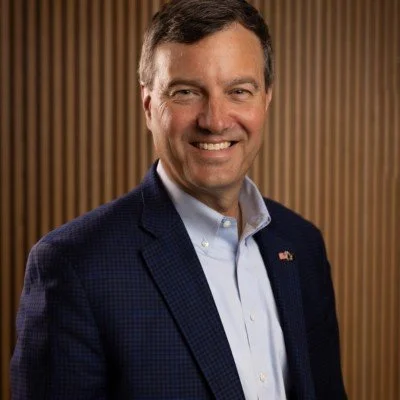
"Look, the Capitol Dome!" Those are the words Jimmy Stewart exclaimed as he saw the U.S. Capitol illuminated in all its glory in the 1939 film Mr. Smith Goes to Washington. For years, his character had only read about it, seen pictures, and imagined what it represented, but witnessing it firsthand made it real—a symbol of democracy, freedom, and hope for an imperfect country.
This film is particularly compelling because it portrays the moral test of leadership. Jefferson Smith, an idealistic young senator, enters Washington full of optimism, only to discover the harsh reality of political corruption, backroom deals, and an entrenched system resisting change. His real test is not just whether he can endure but whether he can uphold his integrity without succumbing to cynicism or hostility. In the face of betrayal and opposition, he holds fast to his values, demonstrating that true leadership requires resilience, composure, and civility, even in adversity.
Since I first watched the film, I have had what I call Capital Dome Moments—times in my career when the meaning of service and leadership came into sharp focus, reminding me why I answered the call. These moments have shaped my journey from a young student inspired by the halls of democracy to a military officer serving in war zones and, later, a city manager navigating the challenges of local governance.
Mission, Integrity & the Power of Civility
Growing up as a Coast Guard dependent in Northern Virginia, I was fortunate to visit the museums and monuments in Washington, D.C., where history comes alive. One Sunday afternoon, I, too, was enamored by the sight of the Capitol Building, but my true moment of awe came as I walked its halls. I distinctly remember stopping in front of the door of Senate Majority Leader Bob Dole, staring at the gold-embossed lettering. Something about that moment struck me—the weight of responsibility behind those doors, the work being done that affected millions of Americans.
I snapped a photo for my civics class, eager to show my teacher. I didn’t realize it at the time, but this was my first Capital Dome Moment—the moment I recognized that public service is not about personal ambition; it is about responsibility to others. From that day forward, my guiding principle became President John F. Kennedy’s famous words: "Ask not what your country can do for you—ask what you can do for your country."
That commitment led me to student government in college, where I served as Student Government President at Southwestern Oregon Community College. It was my first real leadership experience, and I quickly learned that civility and collaboration were not optional—they were essential. Reaching consensus, navigating disagreements respectfully, and ensuring fairness were the pillars of effective leadership. It was a lesson that would serve me well in my military career.
When I joined the U.S. Army, I saw firsthand how leadership is tested under pressure. Many associate military leadership with strict command-and-control structures, but the reality is far more nuanced. The best commanders are not those who rely solely on authority, but those who earn trust through integrity, decisiveness, and respect.
I thought about the historical figures who embodied this kind of leadership. George Washington, known as the "Founder of Civility," wrote Rules of Civility as a teenager, compiled from a French etiquette manual—principles that emphasized duty, service, restraint, respect for the opinions of others and leadership through example. He understood that civility was the foundation of leadership that sustains institutions and warned against petty partisanship, corruption and a decline in moral values upon his departure form the Presidency.
Dwight D. Eisenhower, too, understood this. As Supreme Allied Commander during World War II, he did not lead through sheer force—he led through consensus-building, respectful discourse, and emotional control. He navigated difficult alliances, political divisions, and high-stakes decision-making without allowing discord to undermine the mission. Both Washington and Eisenhower serve as models of what Diane Kalen-Sukra refers to in Save Your City as "Upstanders"—leaders who instill a culture of civility and ethical leadership, even in challenging and toxic environments.
From Battlefield to City Hall: The Leadership Crisis in Civic Life
My second Capital Dome Moment came when I watched President Ronald Reagan stand before the Brandenburg Gate and declare, "Mr. Gorbachev, tear down this wall!" It was a defining moment in history, but for me, it also represented the power of leadership, conviction, and the call to serve. Inspired, I walked into a recruiter’s office and, when asked why I wanted to join, I replied with three simple words: "Duty, Honor, Country."
Commissioning as a Second Lieutenant, I was eager to embrace the challenges of military leadership. The armed forces instill in their members a commitment to dignity, respect, and discipline, teaching that without civility, morale erodes, and mission success is at risk. In combat, a leader’s ability to remain composed under pressure directly affects the confidence and effectiveness of their team.
My third Capital Dome Moment came when I transitioned from the National Guard/Reserves to full-time active duty—one of the hardest personal decisions considering the family sacrifice and knowing that deployment to Iraq was inevitable. There, I served under Lieutenant General Williams, a leader who exemplified what it meant to lead with composure, dignity, and professionalism.
In the chaos of war, his steady hand set the tone for the entire command. I never once saw a quiver in his demeanor, even in the most stressful moments. He shielded his team from unnecessary distractions, allowing them to focus on their mission without being overwhelmed by external pressures. His ability to lead with respect and calmness created a positive command climate, making us more effective as a unit.
Years later, as I prepared for life after the Army, I knew I wanted to continue serving in a role that mattered. My fourth Capital Dome Moment came when I transitioned into municipal government, determined to bring mission-driven leadership to public service. After studying city management while still in uniform, I took on roles such as Planning and Zoning Board Member and Veteran Fellow for the City of Georgetown, Texas, before stepping into city management full-time.
But what I found was an environment vastly different from the military. Instead of a clear mission and a commitment to teamwork, I encountered political infighting, micromanagement, and dysfunction.
In my first position as City Manager of a small West Austin suburb, I was immediately immersed in the sometimes toxic and micromanaging world of Manager-Council relations. Despite my best efforts to focus on governance, strategic planning, and community development, the political landscape had become hyperpolarized, making it difficult to move forward on key initiatives. Elected officials, often driven by short-term political considerations rather than long-term stability, increasingly interfered with day-to-day management, undermining the professional administration of the city.
After a turbulent year of poor relations, I ultimately separated from the city. It was a difficult but eye-opening experience—one that revealed a broader crisis in local government. City councils across the country have become less civil, more contentious, and, in many cases, disconnected from the realities of municipal management. Too often, unrealistic expectations from council members—many of whom lacked experience in governance—created environments where micromanagement and personal politics replaced professional collaboration. This dysfunction not only eroded trust but also made effective leadership nearly impossible.
At the same time, I saw a concerning decline in civic engagement. While the majority of residents simply wanted their tax dollars spent wisely and efficiently on core city services, their voices were often drowned out by a small but vocal minority. These individuals, rather than participating constructively, often resorted to antagonism, misinformation, and personal attacks, further destabilizing governance.
Both realities—the breakdown of civility among elected officials and the rise of destructive public discourse—have made it more imperative than ever that citizens, elected leaders, and city staff work together to restore respect, decorum, and constructive dialogue in government. Without civility, public institutions weaken, trust in government erodes, and decision-making becomes reactionary rather than strategic.
Just as military leaders must maintain discipline under pressure to achieve mission success, civic leaders must uphold civility to foster collaboration, ensure informed decision-making, and ultimately serve the greater good. Without a culture of respect and professionalism, local governments will struggle to function effectively, and communities will bear the consequences.
For municipal leaders seeking resilient, mission-driven professionals, my advice is simple:
HIRE MILITARY
Veterans bring with them a culture of accountability, discipline, and a focus on service over self-interest. They know that true leadership is not about control—it is about stewardship, responsibility, and ethical decision-making.
Because at the end of the day, the best leaders are those who understand that true leadership is service.
More From Dean
Dean was featured as a guest essayist in Lead with Civility by Diane Kalen-Sukra. Find it on Amazon Here: https://amzn.to/4wy9BRO