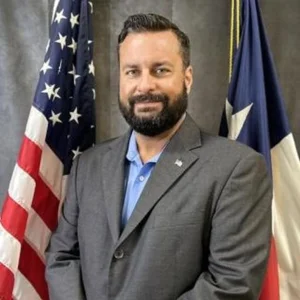
Jim Devlin’s Next Chapter
Jim Devlin reflects on the move from police chief to assistant city manager, the leadership skills that carry forward, and the legacy public servants leave behind.
In Part 2 of our conversation with Jim Devlin, we pick up where we left off in his career journey from police chief to assistant city manager.
If you missed Part 1, you can catch up here first.
This second part of the conversation moves beyond the career path itself and into the leadership lessons that carry from public safety into broader municipal management. Jim talks about succession planning, organizational leadership, mental health, regional partnerships, and the personal responsibility that comes with serving a community over the course of a career.
At the center of the episode is a simple but powerful idea: leadership changes as your role changes, but the foundation remains the same. Relationships matter. Service matters. Humility matters. And when the career is over, people may not remember every project, policy, or program, but they will remember how they were treated.
A Career Move That Was Not Always the Plan
Jim did not necessarily expect his career to move from the police chief’s office into city administration.
Like many chiefs, he thought he would likely finish his career in law enforcement leadership. Whether in Hewitt or somewhere else, he expected the role of police chief to be the place where his public service career concluded.
Over time, that began to change.
Jim started thinking about what leadership looks like when a person has taken an organization as far as they can from one role. He compared the transition to a seasoned operator moving from doing the work on the ground to training and supporting the next generation. It was not that there was nothing left to accomplish in the police department. There was still plenty to do. But the question became whether his next contribution might come from a broader organizational seat.
That question eventually led to a conversation with his city manager and, ultimately, to the opportunity to serve as assistant city manager.
From Department Head to Organizational Leader
One of the most honest parts of the conversation is Jim’s reflection on the learning curve.
As police chief, Jim was the subject matter expert. People came to him for answers about law enforcement, public safety, staffing, operations, and the department’s role in the community.
As assistant city manager, the scope changed.
He was no longer only leading one department. He was learning the broader organization: utilities, court, general services, public works, development, community services, and the many moving parts that make a city function.
Jim acknowledged that, as a police chief, he had a good taste of what was happening across the city. But once he moved into administration, he realized there was much more to learn.
That humility matters. The transition from chief to city administration is not simply a promotion into a larger office. It requires a shift in perspective. It requires learning new disciplines, supporting department directors, and understanding how each piece of the organization affects the others.
The Leadership Skills That Transfer
While the role changed, many of the core leadership skills remained the same.
For Jim, relationship building is one of the most important skills that carried from police leadership into city management. Nothing meaningful gets done in local government without relationships. That includes relationships with elected officials, department directors, employees, peer communities, and the public.
He also pointed to empathy, collaboration, communication, and servant leadership.
Those skills matter because city departments cannot operate in silos. Police, fire, public works, utilities, courts, parks, administration, and development all affect one another. When those departments understand each other, the organization works better. When they do not, even simple problems become harder to solve.
Jim talked about the importance of helping directors and employees see beyond their own departments. A police department may need barricades or cones from general services. Public works may need support during an emergency. Administration may need to communicate more clearly with residents about why something is broken, what is being done, and what comes next.
That kind of collaboration does not happen automatically. It has to be built through trust, communication, and repeated relationship work.
Learning to Lead Differently
Jim also talked about personal growth as a leader.
In public safety, training is abundant. Police chiefs can attend leadership schools, conferences, and professional development programs. But the pace of the job often leaves little time for personal reflection.
As assistant city manager, Jim has found himself thinking more intentionally about how he shows up for others. He talked about recognizing when he is not at his best and understanding how a leader’s mood can affect an entire organization.
That point is easy to overlook, but every leader understands it. If a leader walks into the building frustrated, angry, or distracted, that energy does not stay contained. It travels through the organization.
Jim’s focus on personal growth is not about chasing the next title. It is about becoming a better leader for the organization and the people he serves.
Mental Health Is Not Just a Public Safety Conversation
The episode also moves into an important conversation about mental health and wellness.
Jim and James discussed how much public safety has changed over the last decade. For many years, police officers and firefighters were expected to simply push through difficult calls and keep moving. Over time, the profession has become more willing to acknowledge the cumulative impact of trauma, stress, and constant exposure to crisis.
That progress matters.
But Jim also sees a need for similar conversations in city administration. The pressure is different, but it is still real.
City managers and administrative leaders may not experience the same type of firsthand trauma as public safety personnel, but they still carry the weight of community expectations, elected official relationships, infrastructure failures, personnel issues, emergency decisions, and organizational accountability.
James described it as secondhand smoke. Even when a leader is not the person standing directly in the crisis, they are still exposed to the pressure and consequences surrounding it.
That is a valuable way to think about wellness in local government. Mental health is not only a police and fire issue. It is a leadership issue. It is an organizational issue. It affects anyone who carries responsibility for serving the public.
The Texas City Management Institute
Jim also shared his experience with the Texas City Management Institute, a professional development program connected to TCMA and TML.
The program brought together city managers, assistant city managers, and other municipal professionals for leadership training, crisis communication, peer learning, and capstone projects.
Jim’s group worked on a continuity of operations plan assessment under FEMA guidelines. Other groups worked on projects such as downtown revitalization and succession planning.
Beyond the formal training, Jim emphasized the value of networking and learning from others across the state. He had the opportunity to hear from experienced city managers, senior advisors, and peers who were working through similar issues in their own communities.
That kind of professional development matters because local government leaders rarely need to create everything from scratch. Often, another city has already tried something, learned from it, and built a framework that can be adapted elsewhere.
Borrowing Good Ideas Without Chasing Every New Idea
One of the strongest leadership points in the episode is the balance between learning from others and staying grounded in your own organization’s mission.
Jim talked about the value of borrowing good ideas from other communities, but he also cautioned against coming back from training and immediately changing everything.
That is a real leadership trap.
A conference, training class, or peer conversation can create excitement. Leaders come back with ideas, programs, and examples that worked somewhere else. But not every good idea fits every organization.
Jim’s approach is to look for ideas that align with the mission and values already in place. Some things can be adjusted. Some can be adapted. Some may not fit at all.
Good leaders learn from others without creating chaos inside their own organizations.
Hewitt, Waco, and the Real Central Texas
The conversation also turns to Hewitt, Waco, and the surrounding area.
Jim describes the region as the real Central Texas. Hewitt sits just south of Waco in McLennan County and is part of a region where collaboration between cities is essential.
He talked about the number of communities in the area, including Waco, Robinson, Lorena, Woodway, Bellmead, Lacy Lakeview, West, McGregor, and others. Each community has its own identity, but many of them are connected through shared services, infrastructure, economic development, emergency response, and regional partnerships.
Jim also shared one of the more memorable local details: SpaceX testing rocket engines in McGregor. For someone unfamiliar with the area, the sound and impact can be surprising. For those who live there, it is part of the regional landscape.
Beyond that, Jim sees significant opportunity in the area because of its location between the Dallas-Fort Worth Metroplex and Austin. There is room for growth, commercial development, retail expansion, and long-term investment.
Regional Partnerships Create Value for Citizens
Regional collaboration is a major theme in Jim’s work and in the episode.
In public safety, mutual aid and interagency cooperation are essential. Jim referenced major incidents where agencies across the region responded together, supported one another, and helped communities manage events that exceeded the capacity of any single organization.
That same principle applies on the city administration side.
Cities collaborate on water, wastewater, animal services, infrastructure, emergency management, and other services. In many cases, those partnerships allow communities to provide better service at a better value than they could provide alone.
For citizens, that matters.
Regional cooperation can reduce duplication, strengthen service delivery, improve emergency response, and help communities solve problems that do not stop at jurisdictional boundaries.
Jim’s point is that cities need to continue telling that story. Residents should understand that collaboration is not just a behind-the-scenes government function. It is part of how communities serve people well while trying to be good stewards of public resources.
Advice for Emerging Public Servants
Toward the end of the conversation, James asked Jim what advice he would offer to MPA students and emerging public servants preparing for careers in local government.
Jim’s answer was direct: public service is a marathon, not a sprint.
He encouraged young professionals to know themselves, understand their worth, build relationships, and focus on personal development. Technical skills matter, but they are only part of the equation.
Long-term success in local government requires humility, patience, peer relationships, and the ability to work with people who may not always agree with you.
Jim also emphasized the importance of striving for excellence. Whether someone becomes a finance director, police chief, fire chief, city manager, or department leader, the goal should be to serve well and avoid settling into mediocrity.
Is It Worth It?
After more than three decades in public service, James asked Jim a simple question: was it worth it?
Jim did not hesitate.
Yes.
He acknowledged that the career has been challenging, but he also made it clear that he would not change it. Public service has been worth it.
His answer led to one of the most meaningful reflections of the episode. At the end of a career, people may not remember every facility built, budget item increased, training program created, or policy implemented.
Those things matter, but they may fade over time.
What people remember most is how they were treated.
For Jim, that is the legacy: treating people fairly, helping them grow, supporting their careers, and doing the work in a way that leaves people and organizations better than he found them.
The Next Chapter
Jim Devlin’s story is about moving from chief to city hall, but it is also about the kind of leadership that lasts beyond a title.
The role changes. The responsibilities expand. The decisions become more complex. But the foundation remains the same.
Build relationships. Serve people. Stay humble. Keep learning. Take care of yourself. Take care of the organization. And remember that legacy is often built in the way people experience your leadership day after day.
Connect with Jim Devlin on LinkedIn
About The Clear Voice Podcast
The Clear Voice is a dedicated platform for transparency and expert led dialogue within the professional and public sectors. The show serves as a vital resource for leaders who want to move past surface level discussions and dive into the real world mechanics of governance, management, and organizational growth. James Groom is the host of the program. As the Vice President of Clear Career Professionals and a retired Police Chief, James brings a unique, high stakes perspective to every conversation. His background in public service and executive leadership allows him to extract practical, actionable insights from industry experts that help modern organizations function with total clarity.
Our Core Focus Areas
Executive Leadership: Exploring the transition from technical competence to high level strategic management.
Organizational Transparency: Discussing the importance of open communication and accountability in public and private leadership.
Governance and Strategy: Breaking down the complex decision making processes that drive successful communities and organizations.
Professional Development: Insights on coaching, culture building, and high performance team management.
About Clear Career Professionals
Clear Career Professionals is a specialized recruitment and strategic consulting firm focused on the public sector. We believe that the strength of any municipality or school district lies in the quality of its leadership and the cohesion of its teams.Our team is comprised of former practitioners and retired executives who understand the nuances of public service. We provide organizations with more than just a list of candidates; we provide the strategic oversight and expertise necessary to navigate transitions, maximize taxpayer funds, and implement long term solutions.
Our Strategic Services
Executive Search and Recruitment: A tailored approach to identifying top tier talent for leadership roles in cities and school districts.
Interim Leadership: Providing experienced professionals to guide organizations through critical periods of transition.
Governance and Board Training: Specialized sessions designed to strengthen board relations and help leadership teams function as a unified School Board or City Council & Executive Team.
Shared Solutions Initiative: A program focused on fostering collaboration between municipalities and schools to address shared community challenges.
Connect With Us
Visit our official website to explore current job opportunities or to learn more about our leadership services: clearcareerpro.com.
Follow us for more updates:
Career Opportunities: https://clearcareerpro.com/career-opportunities/
Recruitment Services: https://clearcareerpro.com/recruitment/
Services: https://clearcareerpro.com/all-services/
Clear News: https://clearcareerpro.com/clear-news
The Clear Voice Podcast: https://clearcareerpro.com/the-clear-voice/
LinkedIn: https://linkedin.com/company/clear-career-pro
Facebook:Clear Career Professionals @ClearCareerPro