Communication, Culture, and Workforce Leadership
Leading people through change is rarely just about the change itself.
It is about communication, trust, uncertainty, culture, and helping people understand not only what is happening, but why it is happening and where they fit in the process.
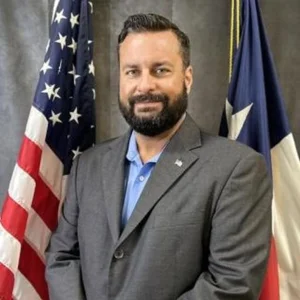
In Episode #84 of The Clear Voice, James Groom sits down with Dee Maddox, founder of DMX Consulting, for a wide-ranging conversation about leadership, human resources, workforce development, organizational change, and the importance of taking care of people through transition.
Dee brings more than 30 years of experience working with people and organizations, including a long federal career and service with NASA during the transition of the Space Shuttle Program. Her perspective is grounded in real-world experience leading and supporting people through large-scale organizational change.
Change Is Inevitable, but That Does Not Make It Easy
One of the clearest themes from the conversation is that people do not automatically accept change simply because the reason for it makes sense.
Dee explains that there is often a long distance between initial resistance and eventual acceptance. That distance is filled with emotion, uncertainty, questions, and the need for repeated communication.
During the transition of the Space Shuttle Program, Dee was involved in the human capital side of helping teams and employees move through a major organizational shift. The challenge was not simply ending one program. It was preserving knowledge, protecting critical talent, retraining employees, and helping people identify new opportunities inside and outside the organization.
Her experience reinforces a simple leadership principle: knowing why change is necessary does not eliminate the difficulty of experiencing it.
That is why communication before, during, and after change matters so much.
The Human Side of Organizational Change
Organizations often focus heavily on systems, policies, budgets, and processes during change.
The people experiencing the change can become an afterthought.
Dee argues that people should be treated as a critical organizational asset. During the NASA transition, that meant looking for ways to retool, retrain, and reposition employees instead of simply treating them as no longer necessary once a particular function changed.
That same lesson applies far beyond NASA.
Whether an organization is restructuring, implementing new technology, changing leadership, consolidating departments, or adjusting how services are delivered, the way leaders communicate with employees can shape how successfully the organization moves forward.
People want to know what is changing, why it is changing, what it means for them, and what support will be available along the way.
Leaders may not always have every answer. Dee's point is that communicating uncertainty is still better than creating a vacuum where rumors and fear take over.
AI, Technology, and the Future of Work
Dee's career also gives her an unusual perspective on technology replacing work.
Early in her career, she worked in a role where employees manually reviewed images of mail and entered information that was later automated by technology.
Years later, the same basic evolution is playing out with artificial intelligence.
Rather than focusing only on whether AI will eliminate jobs, Dee emphasizes the importance of learning how to use technology and understanding how work will change around it.
Her broader point is that technology is not going away.
Organizations need to establish appropriate guardrails, policies, and expectations, but they also need to help employees adapt instead of simply resisting new tools.
HR Is Not Just There for the Organization
One of the more direct parts of the conversation addresses a common criticism of human resources: that HR exists only to protect the organization.
Dee pushes back on that idea.
She describes HR as a conduit, consultant, partner, and advocate that has responsibilities to both the organization and its employees.
At the same time, she encourages employees to become stronger advocates for themselves.
That means understanding job descriptions, policies, performance expectations, benefits, and available resources rather than relying entirely on HR to manage every issue.
The modern HR role, in Dee's view, is less about controlling information and more about helping people understand and navigate the organization.
Breaking Down Silos Inside Organizations
Silos are a common problem in local government and other complex organizations.
Police, fire, public works, parks, finance, HR, and administration may all be working toward the same larger mission while operating almost entirely inside their own worlds.
Dee explains that leaders have to intentionally create opportunities for departments to understand each other.
That can be as simple as tours, staff meetings, newsletters, lunch-and-learns, or opportunities for employees to explain what their work actually involves.
When people better understand the challenges and responsibilities of other departments, they are more likely to see how their own role fits into the larger organization.
In Dee's words, you cannot create harmony with only one instrument.
Why Strong Candidates Still Get Passed Over
The conversation also turns toward career development and recruiting.
Dee offers practical advice for candidates who believe they are qualified but continue to get passed over for opportunities.
One of her strongest recommendations is to build a "highlight reel."
Candidates should be ready to clearly explain the experiences, accomplishments, and examples that demonstrate why they fit the role.
A resume may show where someone worked and what positions they held, but an interview is where the candidate has to connect those experiences directly to what the organization needs.
Dee also encourages candidates to pay close attention to preferred qualifications.
Those qualifications may not technically be required, but they can become the differentiator when several candidates meet the basic requirements.
The challenge is not simply having the experience.
It is communicating the experience clearly enough that the selecting official understands the fit.
The DEED Framework
Dee also shares her DEED Framework for leadership.
The framework focuses on four components:
Design. Clearly identify the desired outcome.
Education. Learn what is necessary to achieve it and prepare the people involved.
Execution. Put the plan into action.
Documentation. Track progress, outcomes, milestones, and lessons learned.
The framework is built around ownership and accountability.
Dee's point is that organizations often do good work without consistently documenting how that work gets done or what results it produces.
Without documentation, organizations can struggle with consistency, continuity, and performance measurement.
The DEED Framework provides a repeatable way to move from intention to execution while creating evidence of progress along the way.
The Work People Never See
Another major theme of the episode is the invisible work of public service.
Residents often see the most visible moments involving police officers, firefighters, public works employees, parks staff, or other city employees.
What they do not always see are the smaller tasks that consume time and keep communities functioning.
A police officer assisting a stranded motorist may no longer be visible on patrol. A city employee processing permits may be dealing with a much larger workload than a resident realizes. A small HR department may be managing recruiting, benefits, onboarding, employee questions, and workforce issues at the same time.
Those everyday actions rarely make headlines, but they still matter.
Dee emphasizes that leaders and organizations should do a better job documenting and communicating the work their people are doing so the public and employees better understand the value being created.
Developing People Helps Keep Good People
Employee development is not only about training.
It is also about giving people the tools, information, and opportunities they need to grow.
Dee discusses leadership development as a process where people can learn new approaches, try them in the workplace, and return with a better understanding of what works.
That can include something as simple as delegation.
A leader who is overwhelmed may discover that a routine task can become a development opportunity for someone else who wants to grow.
Those small adjustments can reduce burnout, build capability, and create a stronger pipeline of future leaders.
Organizations that invest in people are also more likely to keep strong employees because those employees feel supported and see a path forward.
Communication Is Still the Foundation
At the end of the episode, James asks Dee what she wishes every leader understood about taking care of their workforce.
Her answer is simple:
Communication.
Leaders do not need to know everything before they communicate.
In fact, sometimes the most important message is simply acknowledging that the organization does not have all the answers yet.
Silence creates room for assumptions, fear, rumors, and misinformation.
Clear communication helps people understand what is happening, what is known, what is still unknown, and when they can expect additional information.
For Dee, that is one of the most important responsibilities a leader has.
Watch Episode #84 of The Clear Voice
Episode #84 of The Clear Voice, Leading Through Change with Dee Maddox, explores what leaders can do to communicate better, support their workforce, develop people, and navigate organizational change more effectively.
Connect with Dee Maddox
Dee Maddox on LinkedIn: https://www.linkedin.com/in/deemaddox/
DMX Consulting on LinkedIn: https://www.linkedin.com/company/dmxconsulting/
DMX Consulting: https://deemaddoxconsulting.com/
ATD Dallas: https://tddallas.org/page-1863843
About The Clear Voice Podcast
The Clear Voice is a dedicated platform for transparency and expert led dialogue within the professional and public sectors. The show serves as a vital resource for leaders who want to move past surface level discussions and dive into the real world mechanics of governance, management, and organizational growth. James Groom is the host of the program.
About Clear Career Professionals
Clear Career Professionals is a specialized recruitment and strategic consulting firm focused on the public sector. We believe that the strength of any municipality or school district lies in the quality of its leadership and the cohesion of its teams. Our team is comprised of former practitioners and retired executives who understand the nuances of public service. We provide organizations with more than just a list of candidates; we provide the strategic oversight and expertise necessary to navigate transitions, maximize taxpayer funds, and implement long term solutions.
Connect With Us
Visit our official website to explore current job opportunities or to learn more about our leadership services: clearcareerpro.com.
Follow us for more updates:
Career Opportunities: https://clearcareerpro.com/career-opportunities/
Recruitment Services: https://clearcareerpro.com/recruitment/
Services: https://clearcareerpro.com/all-services/
Clear News:https://clearcareerpro.com/clear-news
The Clear Voice Podcast: https://clearcareerpro.com/the-clear-voice/
LinkedIn: https://linkedin.com/company/clear-career-pro
Facebook:Clear Career Professionals @ClearCareerPro