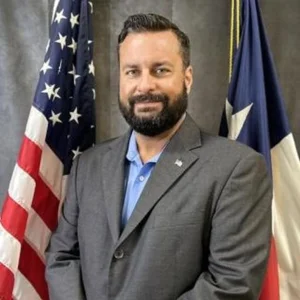
A Conversation About Authentic Leadership, Workplace Culture, and the CAMPOUT Method
In Episode 66 of The Clear Voice, Joseph Lujan joins the podcast to discuss authentic leadership, workplace culture, generational change, and the leadership framework behind his book, Reflective Resonance, A Quiet Spark Approach to Authentic Leadership.
Joseph is the author of Reflective Resonance, A Quiet Spark Approach to Authentic Leadership, and the creator of the CAMPOUT Method, a leadership framework built around consistency, authenticity, mindfulness, purpose, optimization, upshifting, and transformation. His work focuses on helping leaders better understand themselves, better support their teams, and build leadership practices rooted in trust, emotional intelligence, and self awareness.
This conversation is especially relevant for local government leaders, department heads, supervisors, and emerging leaders who are trying to navigate changing workplace expectations while still maintaining accountability, service, and organizational effectiveness.
Leadership in a Changing Workplace
The episode begins with a discussion about generational dynamics in the workplace, including the way Gen Z and younger employees are often labeled as difficult, entitled, or hard to manage. Joseph offers a more balanced view. He acknowledges that every generation enters the workplace with different expectations, but he also challenges leaders to avoid using labels as a substitute for understanding.
Workplace culture has changed significantly, especially after COVID. In many organizations, the old assumption that location equals productivity no longer fits the way employees think about work, flexibility, motivation, and purpose. Joseph explains that culture is no longer only physical. It has to be built more intentionally.
For public sector organizations, this creates a real leadership challenge. Local governments still have essential services to deliver. Public works, police, fire, finance, administration, courts, utilities, development services, and other departments cannot simply abandon structure. At the same time, leaders cannot ignore the fact that employees increasingly expect flexibility, trust, communication, and a stronger connection to purpose.
Autonomy, Trust, and Accountability in Leadership
Joseph makes an important point about autonomy. Employees are often more motivated when they feel trusted. That does not mean every employee gets unlimited freedom or that accountability disappears. It means leaders should be thoughtful about how they use trust, flexibility, and correction.
One of the strongest leadership ideas in the conversation is that employees should be given autonomy until they prove they cannot handle it. That approach respects employees as adults while still preserving organizational standards.
The opposite approach, micromanagement, often creates the very problems leaders are trying to prevent. When employees are not trusted, they become less invested. When expectations are inconsistent, employees start answer shopping or second guessing their decisions. When leaders use flexibility as a reward or punishment without a clear purpose, trust can erode quickly.
In local government, accountability will always matter. The public expects services to be delivered. Laws, policies, liability, safety, and public trust all matter. But accountability works better when it is paired with consistency, communication, and trust.
Why Competence Alone Is No Longer Enough
The conversation also explores a leadership reality that many organizations are facing. Competence is still important, but competence alone is no longer enough.
A person can be technically strong, experienced, and capable of producing results, but still struggle as a leader if they lack emotional intelligence, communication skills, and self awareness. Joseph connects this to the way employees experience leadership. People want to know whether their leaders are genuine, whether they care, and whether they understand the effect their communication has on others.
This is especially important in government organizations, where many supervisors are promoted because they were strong technical performers. A great officer, planner, finance employee, utility worker, or analyst does not automatically become a great leader the moment they are promoted. Leadership requires a different set of skills.
Joseph’s work pushes leaders to move beyond checking boxes and managing tasks. He encourages leaders to coach, develop, listen, reflect, and create space for others to succeed.
Joseph Lujan’s Leadership Journey
Joseph brings a practical leadership background to the conversation. His experience includes county probation work, federal probation work, and leadership responsibilities in public service. Throughout his career, he worked under many different supervisors and leaders, which gave him the opportunity to observe both strong leadership and leadership that needed improvement.
Those experiences helped shape his own leadership framework. Rather than treating difficult or ineffective supervisors as wasted experiences, Joseph used them as lessons. He paid attention to what worked, what failed, and what kind of leader he wanted to become.
One of the most valuable lessons from his background is the importance of individualizing leadership. Joseph explains that when working with people under supervision, he had to adapt to each person, each situation, and each environment. That same principle applies to leading employees.
Every employee does not need the same style of supervision. Some need direct feedback. Some need encouragement. Some need structure. Some need space. Some respond well to casual communication, while others may experience anxiety from a vague message or an unclear request.
Effective leadership requires knowing people well enough to understand the difference.
The CAMPOUT Method and Reflective Leadership
A central part of the episode is Joseph’s CAMPOUT Method. The framework gives leaders a memorable way to think about personal leadership growth and organizational impact.
The CAMPOUT Method includes consistency, authenticity, mindfulness, purpose, optimization, upshifting, and transformation.
The first part of the framework focuses on anchoring leadership. Leaders need consistency, authenticity, mindfulness, and purpose before they can effectively influence others. The second part focuses on advancing leadership through optimization, upshifting, and transformation.
This makes the framework both personal and organizational. Joseph is not simply asking leaders to be better for their own benefit. He is encouraging leaders to reflect on themselves so they can better serve their teams, their organizations, and the communities connected to their work.
Consistency Builds Trust
Consistency is one of the most important leadership concepts discussed in the episode. Inconsistent leadership creates confusion. Employees do not know which standard applies, which direction to follow, or whether a decision made today will be treated differently tomorrow.
Joseph explains that consistency is especially important in government, where policies, liability, procedures, and public expectations create a need for reliable decision making. When leaders are inconsistent, employees may become hesitant, frustrated, or overly dependent on constant approval.
Consistent leadership does not mean leaders never adjust, learn, or correct mistakes. It means employees understand the expectations, trust the process, and know that decisions are not being made randomly.
Authenticity Makes Leadership Believable
Authenticity is another major theme throughout the episode. Joseph is clear that employees can usually tell when leadership is genuine and when it is not.
Authenticity does not mean oversharing, being unprofessional, or trying to be everyone’s friend. It means showing up in a way that is real, grounded, and consistent with the values a leader claims to hold.
The conversation includes practical examples of how authenticity can be lost through robotic communication, automatic responses, and performative leadership presence. A leader may think they are communicating efficiently, but employees may experience that communication as distant or insincere.
Joseph’s point is simple. If leaders want employees to trust them, they need to be genuine. They need to be present. They need to build rapport before they need it.
Mindfulness in Leadership Communication
Mindfulness in leadership is not just about personal reflection. It also affects how leaders communicate with their teams.
One example discussed in the episode is the vague message that says, “Come see me.” Some employees may not think twice about that message. Others may immediately assume they are in trouble. A leader who understands their people will recognize that small communication choices can create unnecessary anxiety.
This does not mean leaders need to overthink every word. It means leaders should be aware of their impact. Tone, timing, facial expressions, email habits, and informal messages all shape how employees experience leadership.
Mindful communication is a practical leadership skill. It helps leaders avoid unnecessary confusion, reduce fear based management, and build stronger relationships with employees.
Purposeful Leadership and the Why
Purpose is a natural fit for public service, but it still has to be reinforced. People who work in local government are often connected to important missions, including public safety, infrastructure, financial stewardship, community development, parks, utilities, customer service, and quality of life.
But even meaningful work can begin to feel routine when employees are overwhelmed, burned out, or disconnected from the larger mission.
Joseph discusses the importance of helping employees reconnect with the why behind their work. Transparency, recognition, and meaningful communication all help reinforce purpose. Leaders should not assume employees automatically feel valued or understand the impact of their work.
Sometimes the most meaningful recognition is simple. A thoughtful comment, a note, a specific thank you, or a moment of genuine appreciation can remind employees that their work matters.
Optimizing, Upshifting, and Transforming Leadership
Joseph explains that the second half of the CAMPOUT Method is about advancing leadership. Once leaders begin working on consistency, authenticity, mindfulness, and purpose, they can start asking deeper questions.
How do we measure our leadership impact?
How do we reflect on our blind spots?
How do we invite feedback from our teams?
How do we help peers and other leaders grow?
How do we transform the organization through better leadership habits?
This part of the framework moves leadership from theory to practice. Joseph encourages leaders to use tools, worksheets, feedback, and recurring reflection to continue improving. Leadership growth is not something a person completes once and moves past. It requires continued attention.
The best leaders keep checking their own influence, their own communication, and their own effectiveness.
Why Reflective Leadership Matters in Local Government
Local government leadership is personal, visible, and consequential. Decisions made inside city halls, police departments, public works facilities, fire stations, courts, libraries, and administrative offices affect real people.
That makes reflective leadership more than a professional development topic. It is part of responsible public service.
Leaders in local government are responsible for employees, public resources, public trust, and community outcomes. The way they lead influences morale, retention, productivity, customer service, and organizational stability.
Joseph’s message is especially important for leaders who want to build healthier workplace cultures. People do not just respond to policies and procedures. They respond to how leaders show up, how leaders communicate, and whether leaders are willing to look inward before blaming everyone else.
Final Takeaway from Joseph Lujan
Joseph closes the episode with a practical reminder for leaders. Show up authentically. Be genuine with yourself and with others. Everyone has good days and bad days, but leaders cannot allow their bad days to define the culture around them.
Leadership influence is stronger than many people realize. Employees notice how leaders respond. They notice whether leaders are present. They notice whether leaders are consistent. They notice whether leaders care.
Reflective leadership begins with that awareness.
For anyone leading in local government, public service, or any organization where people matter, this episode offers a timely reminder. Leadership is not just a title. It is a responsibility to be consistent, authentic, mindful, purposeful, and willing to grow.
Connect with Joseph Lujan and Reflective Resonance
Reflective Resonance Worksheets
Listen to Episode 66 of The Clear Voice
About The Clear Voice Podcast
The Clear Voice is a dedicated platform for transparency and expert led dialogue within the professional and public sectors. The show serves as a vital resource for leaders who want to move past surface level discussions and dive into the real world mechanics of governance, management, and organizational growth. James Groom is the host of the program. As the Vice President of Clear Career Professionals and a retired Police Chief, James brings a unique, high stakes perspective to every conversation. His background in public service and executive leadership allows him to extract practical, actionable insights from industry experts that help modern organizations function with total clarity.
Our Core Focus Areas
Executive Leadership: Exploring the transition from technical competence to high level strategic management.
Organizational Transparency: Discussing the importance of open communication and accountability in public and private leadership.
Governance and Strategy: Breaking down the complex decision making processes that drive successful communities and organizations.
Professional Development: Insights on coaching, culture building, and high performance team management.
About Clear Career Professionals
Clear Career Professionals is a specialized recruitment and strategic consulting firm focused on the public sector. We believe that the strength of any municipality or school district lies in the quality of its leadership and the cohesion of its teams.Our team is comprised of former practitioners and retired executives who understand the nuances of public service. We provide organizations with more than just a list of candidates; we provide the strategic oversight and expertise necessary to navigate transitions, maximize taxpayer funds, and implement long term solutions.
Our Strategic Services
Executive Search and Recruitment: A tailored approach to identifying top tier talent for leadership roles in cities and school districts.
Interim Leadership: Providing experienced professionals to guide organizations through critical periods of transition.
Governance and Board Training: Specialized sessions designed to strengthen board relations and help leadership teams function as a unified School Board or City Council & Executive Team.
Shared Solutions Initiative: A program focused on fostering collaboration between municipalities and schools to address shared community challenges.
Connect With Us
Visit our official website to explore current job opportunities or to learn more about our leadership services: clearcareerpro.com.
Follow us for more updates:
Career Opportunities: https://clearcareerpro.com/career-opportunities/
Recruitment Services: https://clearcareerpro.com/recruitment/
Services: https://clearcareerpro.com/all-services/
Clear News: https://clearcareerpro.com/clear-news
The Clear Voice Podcast: https://clearcareerpro.com/the-clear-voice/
LinkedIn: https://linkedin.com/company/clear-career-pro
Facebook:Clear Career Professionals @ClearCareerPro