Why Followership Deserves a Place in the Leadership Conversation
Organizations invest heavily in leadership development. We send supervisors to leadership academies, managers to conferences, and executives to coaching programs. We read books about leadership, study leadership styles, and spend countless hours talking about what makes someone a great leader. But there is another side of that relationship that receives far less attention. Followership. In Episode 80 of The Clear Voice, Rick Chambers joins James Groom to discuss why strong organizations need more than good leaders. They also need people throughout the organization who understand how to follow well. Rick describes followership as a combination of skills and mindset that helps the leader, the team, and the individual become more effective. Those skills include critical thinking, coachability, self-management, and managing up. That definition immediately separates followership from one of its biggest misconceptions. A good follower is not simply someone who does what they are told.
Good Followership Is Not Blind Agreement
Strong followers think. They ask questions. They recognize problems. They understand the mission. They know when to support a decision and when leadership may need additional information. Rick makes it clear that being a yes person is not good followership. Effective followers must be willing to exercise judgment and, when necessary, respectfully challenge the people above them. That becomes particularly important when a leader has a blind spot. Employees who have spent years inside an organization often know its history, culture, personalities, and political realities better than a newly appointed leader. Good followership means using that knowledge to help the new leader succeed rather than standing back and waiting for a mistake. The goal is not to prove the boss wrong. The goal is to help the organization get the best result.
Leadership and Followership Are More Connected Than We Think
One reason organizations may overlook followership is that we tend to think of leadership as a position. Someone becomes a supervisor, director, chief, or city manager, and we label that person a leader. But leadership and followership are often more fluid than an organizational chart suggests. Rick and James use football as an example. A coach calls the play. The quarterback receives it. Once the offense reaches the line, the quarterback may see something the coach could not see and call an audible. Seconds later, another player may have to make an immediate decision as the play develops. The formal hierarchy never disappeared, but leadership shifted based on the circumstances. That same dynamic exists in healthy organizations. The person closest to a problem may have information that senior leadership does not have. Strong leaders create an environment where employees can use that information. Strong followers know how and when to step forward. Rick argues that organizations can become more effective when they rely less exclusively on the organizational chart and more on the interaction between leaders and followers.
Better Followers Can Become Better Leaders
Followership also provides an important foundation for leadership development. Rick points to his experience at Texas A&M and the military service academies, where future officers spend their earliest training learning how to follow before they are expected to lead. There is a practical reason for that. Good followers learn how to understand the priorities of the people above them. They learn how decisions move through an organization, how to communicate effectively, how to build trust, and how to manage relationships. Those skills do not become obsolete when someone gets promoted. They become even more important. A department director still follows a city manager. A city manager still works for a governing body. Executives answer to boards, customers, stakeholders, or communities. Almost everyone leads and follows at the same time. That makes followership development part of leadership development, not a competing idea.
Managing Up Is a Leadership Skill Too
Managing up sometimes gets confused with trying to impress the boss. That is not what Rick is describing. Effective managing up means understanding what leadership is trying to accomplish and communicating in a way that helps them make better decisions. That includes knowing their priorities, concerns, pressures, and even the pressures being placed on them by the next level of the organization. It also means recognizing that being correct is not always enough. Rick shares examples from his career where the data clearly supported a recommendation, but presenting the right answer did not automatically persuade leadership. The lesson was not simply that the boss made a bad decision. It was that the follower also had a responsibility to understand how that leader viewed the issue and present the information in a way that could actually influence the decision. That is a different kind of accountability. Instead of asking only, "Why didn't my boss listen to me?" the better question may sometimes be, "What could I have done differently to communicate this?"
Sometimes Good Followership Means Saying No
There are limits. Followership does not require someone to support unethical or illegal conduct. Rick discusses the point at which a follower may have exhausted reasonable efforts to influence the situation and must decide whether they can continue supporting the organization. That decision can have real consequences. Leaving a job may mean losing income, benefits, or security. That is why Rick and James discuss the importance of maintaining options throughout a career. Professional relationships, continued development, and personal financial stability can give someone the ability to make the right ethical decision when remaining in a position is no longer acceptable. Having options can actually make someone a stronger follower because they are less vulnerable to pressure to participate in something they believe is wrong.
Be the Trim Tab
Rick closes the episode with an analogy that captures the larger idea behind followership. A trim tab is a small component on the rudder of a large ship. By disrupting the flow of water just enough, that small piece can help move the rudder and ultimately change the direction of the entire vessel. Rick believes people inside organizations have the same kind of opportunities. You may not have the title. You may not have the final authority. You may not sit at the top of the organizational chart. But you still have agency. A thoughtful conversation, a well presented alternative, a willingness to speak up, or simply taking ownership of the mission can influence a leader and help change the direction of an organization. Sometimes moving the ship starts with the person nobody thought was steering it.
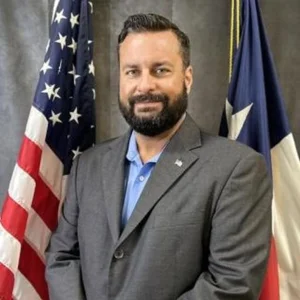
Rick Chambers is the author of Inspired: A Story of Leading, Following, and Changing and the creator of Followership Works, where he shares research-based information and practical resources focused on developing stronger followership skills.
Connect with Rick Chambers:
LinkedIn
https://www.linkedin.com/in/followership/
Followership Works
https://followership.works
Inspired: A Story of Leading, Following, and Changing
https://amzn.to/4zpSe7y
About The Clear Voice Podcast
The Clear Voice is a dedicated platform for transparency and expert led dialogue within the professional and public sectors. The show serves as a vital resource for leaders who want to move past surface level discussions and dive into the real world mechanics of governance, management, and organizational growth. James Groom is the host of the program. As the Vice President of Clear Career Professionals and a retired Police Chief, James brings a unique, high stakes perspective to every conversation. His background in public service and executive leadership allows him to extract practical, actionable insights from industry experts that help modern organizations function with total clarity.
Our Core Focus Areas
Executive Leadership: Exploring the transition from technical competence to high level strategic management.
Organizational Transparency: Discussing the importance of open communication and accountability in public and private leadership.
Governance and Strategy: Breaking down the complex decision making processes that drive successful communities and organizations.
Professional Development: Insights on coaching, culture building, and high performance team management.
About Clear Career Professionals
Clear Career Professionals is a specialized recruitment and strategic consulting firm focused on the public sector. We believe that the strength of any municipality or school district lies in the quality of its leadership and the cohesion of its teams.Our team is comprised of former practitioners and retired executives who understand the nuances of public service. We provide organizations with more than just a list of candidates; we provide the strategic oversight and expertise necessary to navigate transitions, maximize taxpayer funds, and implement long term solutions.
Our Strategic Services
Executive Search and Recruitment: A tailored approach to identifying top tier talent for leadership roles in cities and school districts.
Interim Leadership: Providing experienced professionals to guide organizations through critical periods of transition.
Governance and Board Training: Specialized sessions designed to strengthen board relations and help leadership teams function as a unified School Board or City Council & Executive Team.
Shared Solutions Initiative: A program focused on fostering collaboration between municipalities and schools to address shared community challenges.
Connect With Us
Visit our official website to explore current job opportunities or to learn more about our leadership services: clearcareerpro.com.
Follow us for more updates:
Career Opportunities: https://clearcareerpro.com/career-opportunities/
Recruitment Services: https://clearcareerpro.com/recruitment/
Services: https://clearcareerpro.com/all-services/
Clear News: https://clearcareerpro.com/clear-news
The Clear Voice Podcast: https://clearcareerpro.com/the-clear-voice/
LinkedIn: https://linkedin.com/company/clear-career-pro
Facebook:Clear Career Professionals @ClearCareerPro