A Lifetime of Service and Still Shaping Communities
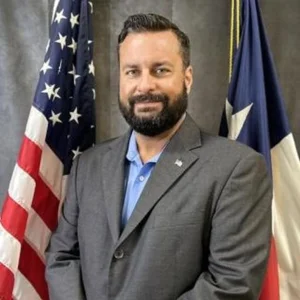
A conversation with Dr. Kent Myers
When I sat down with Dr. Kent Myers, I expected to spend an hour talking about city management.
Instead, we talked about law school, regional cooperation, coaching Little League, SpaceX, and why communication has become one of the most important leadership skills in local government. By the time our conversation ended, I realized we had spent surprisingly little time talking about Kent’s resume. In fact, I do not think we spent any time talking about his doctorate which is an impressive feat in of itself.
Instead, we talked about the decisions that shaped his career and resume. That turned out to be far more interesting.
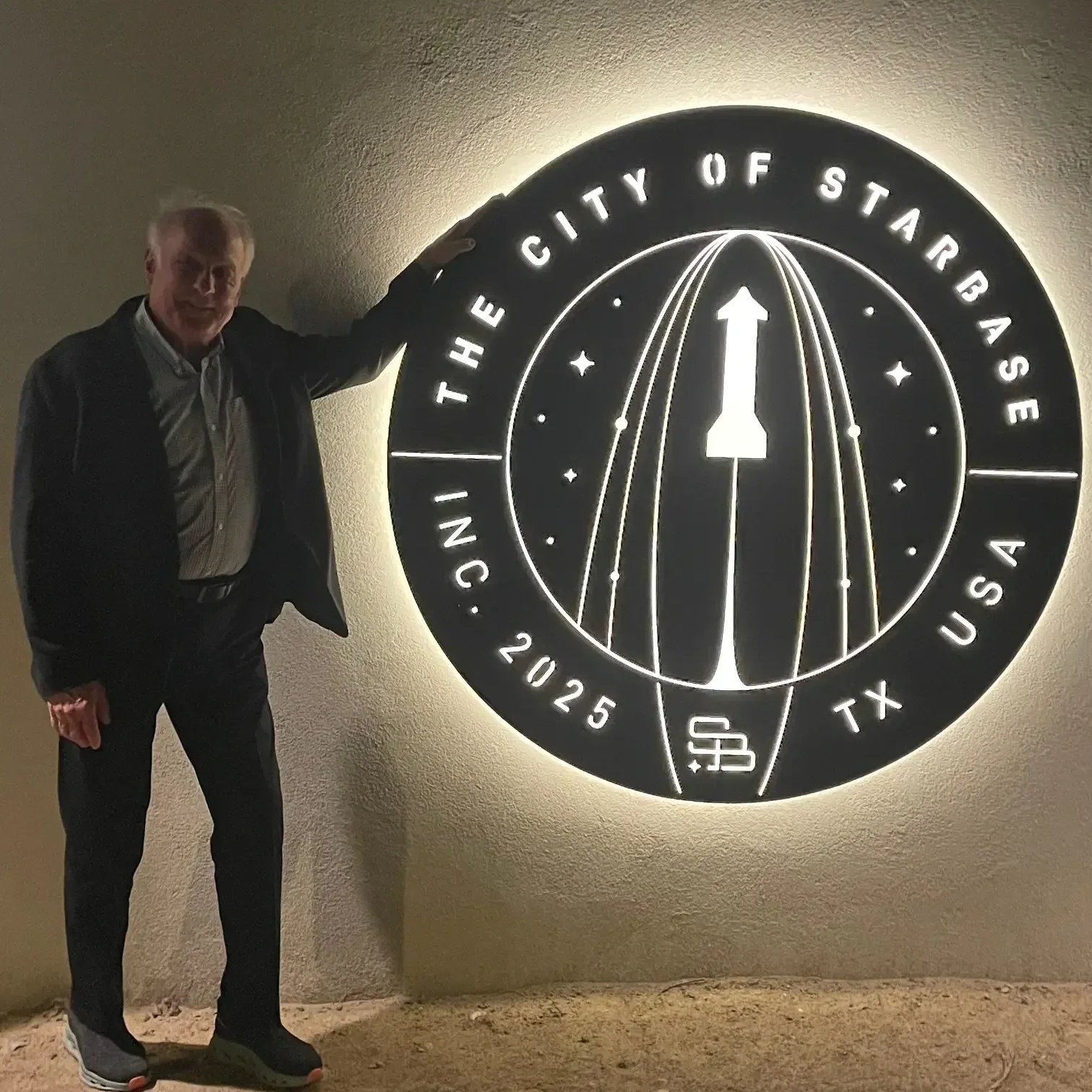
Over more than four decades, Kent has served as a city manager in four states, led communities through periods of tremendous growth and change, mentored future public administrators, co-founded Clear Career Professionals, and most recently helped establish one of America’s newest municipalities, the City of Starbase, Texas. Those accomplishments tell you where he has been.
They do not tell you why he went.
To understand that, you have to start with a young man who thought he wanted to become a lawyer.
“The Law Profession Wasn’t for Me”
Looking back, it is hard to imagine Kent Myers doing anything other than city management.
After earning a Criminal Justice degree from the University of Texas at Arlington, he enrolled in law school with every intention of becoming an attorney. It seemed like the logical next step.
About a semester and a half later, he knew it was not.
“The law profession wasn’t for me,” Kent told me with a laugh.
Many people would have continued simply because they had already invested the time. Kent did something far more difficult. He admitted he was pursuing the wrong career and started looking for another path.
A conversation with one of his professors at UTA proved to be the turning point.
Kent explained that he still wanted to earn a graduate degree, but he wanted one that was both meaningful and marketable. His professor suggested a Master of Public Administration. Texas Christian University offered him a teaching assistantship, waived his tuition, and suddenly a new opportunity appeared.
Kent entered the program interested in public management, but he had not yet experienced the day-to-day work of running a city. That opportunity would soon confirm where he belonged.
Graduate school introduced Kent to local government in ways he never expected. During the program, Kent accepted an internship at the City of Hurst. The classroom had introduced him to the broader structure of public administration. Hurst allowed him to see how one municipal organization operated from the inside.
The Summer That Changed Everything
Kent expected the internship to provide a closer look at municipal management. Instead, it immersed him in it.
During the summer, the city’s Human Resources Director unexpectedly left, and Kent found himself placed in charge of the department. He gained firsthand experience with personnel policies, employee discipline, benefits, competitive compensation, and the daily relationship between Human Resources and the city manager’s office.
“I got some real good experience,” he recalled. “I got to see how the city management form worked, and that really confirmed that this was the career path I wanted.”
After completing his graduate degree, Kent returned to the University of Texas at Arlington for a six-month research project funded by the Texas Municipal League. The project examined successful intergovernmental cooperation across the state.
Today, regional dispatch centers, shared services, cooperative purchasing agreements, and partnerships between neighboring communities are familiar parts of local government. At the time, those ideas were still gaining traction.
The project took Kent across Texas to study communities that had found practical ways to work together. In Grayson County, several cities pooled their resources to create a shared computer center rather than maintaining separate technology operations. Near Corpus Christi, municipalities and the county collaborated on a regional landfill instead of building and operating several individual facilities.
The examples were different, but the lesson was consistent: communities could often provide stronger services and make better use of limited resources by working together.
As the project was nearing completion, Kent’s supervisor connected him with the East Texas Council of Governments, commonly known as ETCOG.
For the next three years, he traveled throughout East Texas helping smaller cities that often lacked the resources to employ full-time professional management. The work exposed him to communities operating under significant financial constraints and taught him how much could be accomplished through practical advice, regional support, and careful use of limited funds.
Looking back, the progression makes sense. Hurst introduced him to the internal realities of running a city. The Texas Municipal League project showed him how communities could work together. ETCOG gave him experience helping smaller municipalities turn ideas into workable solutions.
Then Converse gave him the opportunity to lead one.
Right Place at the Right Time
At just twenty-seven years old, Kent became the first City Manager of Converse, Texas.
The city had recently adopted a home rule charter and was transitioning to a council-manager form of government. At the same time, population growth in the San Antonio area was beginning to accelerate. Converse needed someone who could help establish the city’s new administrative structure while guiding an organization entering a period of significant change.
For most young professionals, it would have been a daunting opportunity.
Kent remembers it a little differently.
“I guess I was in the right place at the right time,” he said.
There is certainly some truth to that. Timing always plays a role in a career.
But after listening to Kent’s story, I could not help but think timing was only part of the equation. By the time Converse came calling, he had seen a city organization from the inside, studied how communities worked together, and spent three years helping smaller municipalities navigate practical challenges with limited resources.
Preparation had quietly been taking place all along.
Converse was simply the first opportunity to put it into practice.
Looking for a New Adventure
Kent would remain in Converse for about seven years, but the role did more than establish his career. It gave him the confidence to begin asking what else might be possible.
When opportunities later took him beyond Texas, he did not describe those moves in terms of prestige, salary, or climbing a professional ladder.
“I was looking for kind of a new adventure,” he said.
That answer explains much of what came next.
Kent moved to Casa Grande, Arizona, where he entered a larger organization and became involved in major economic development efforts. He later led Hot Springs, Arkansas, a tourism and arts community with hundreds of employees and a wide range of municipal services. His career would eventually take him to Port Angeles, Washington, and then back to Texas as City Manager of Fredericksburg.
Each move brought a different set of laws, political expectations, organizational cultures, and community priorities.
The transition from one state to another required more than learning a new city. Kent had to understand different legal frameworks, local customs, and internal cultures. In some communities, he was responsible for services he had never managed before, including airports, libraries, port relationships, and economic development organizations.
Those experiences expanded not only the size of the organizations he led, but also his understanding of what local government could be.
Many careers are measured by promotions, but Kent seemed to measure his by the adventures each new opportunity offered. He was willing to leave what was familiar, learn a new environment, and begin again.
That willingness to adapt would become one of the defining lessons of his career.
What Changed and What Never Did
Every community Kent led was different, but the core challenges were often remarkably familiar.
Personnel challenges were a constant in every organization. Budgets had to be balanced. Infrastructure had to be maintained and expanded. Employees needed clear expectations, elected officials needed accurate information, and citizens expected services to work.
The details varied, but the responsibility did not.
Kent saw those similarities most clearly in infrastructure. In older communities like Fredericksburg and Port Angeles, aging water and sewer lines required constant attention. Some systems were forty or fifty years old. In Hot Springs, crews even uncovered wooden pipes beneath parts of downtown.
At the same time, growing communities needed new infrastructure to support future development. A city manager had to preserve what already existed while preparing for what came next.
The financial environment changed as well. Early in Kent’s career, cities often relied on a wide range of federal grants to support code enforcement, law enforcement, libraries, planning, and capital projects. Over time, much of that direct support declined, leaving local governments to find new ways to fund the same essential services.
Still, when Kent talked about the constants of city management, he kept returning to people.
Good policies mattered because employees needed consistency. Communication mattered because councils, department heads, and citizens needed to trust the organization. Leadership mattered because no budget, project, or strategic plan could succeed without people willing to carry it forward.
The cities changed.
The people remained at the center of the work.
Leadership Is About People
By the time Kent reached the midpoint of his career, the profession itself was changing.
The fundamentals of local government remained the same. Cities still had to maintain streets and utilities, balance budgets, and provide reliable services. But the expectations placed on public leaders had evolved dramatically.
When Kent first entered city management, information traveled at a much slower pace. Residents attended council meetings, read the local newspaper, or called City Hall with questions. Today, a rumor can spread across social media in minutes, and public expectations often evolve faster than organizations can respond.
For Kent, one leadership skill has become more important than any other.
Communication.
“Communication builds trust,”he told me. “If you don't communicate, somebody else will communicate for you.”
That simple philosophy became one of the defining lessons of his career. Communities are willing to accept difficult decisions when they understand why they are being made. Employees are more willing to embrace change when leaders communicate honestly. Councils function better when expectations are clear.
Trust begins with communication.
It is a lesson that extends well beyond city government.
As we continued talking, another theme began to emerge.
For all the discussion about infrastructure projects, organizational growth, and changing laws, Kent kept bringing the conversation back to people. Technical knowledge matters. Experience matters. But leadership has become increasingly dependent on something that cannot be found on a resume.
Emotional Intelligence
“I think emotional intelligence is more important today than it's ever been,” Kent said. Leaders must understand what motivates people, recognize when someone is struggling, navigate conflict, and build relationships that withstand disagreement.
Those qualities rarely appear on an application.
They reveal themselves over time.
Kent believes every community has its own personality. Every organization develops its own culture. A leader who thrives in one city may not necessarily be the right fit for another. Understanding those differences became one of the most valuable skills he developed throughout his career.
The more cities he served, the more convinced he became that leadership is about fit as much as qualifications.
More Than a Job
City management has never been a profession that neatly fits into a traditional workday.
Council meetings stretch into the evening. Emergencies happen on weekends. Budgets rarely cooperate with calendars, and community events often fill the hours most people reserve for family.
Kent understood those demands from the beginning. He also understood that if he wasn't intentional, the job could consume every part of his life.
While raising his two sons, he coached their baseball and football teams. If work remained at the office, he packed it up, headed to the ball field, and finished it later that evening after practice.
Looking back, he considers that decision one of the most important he made.
“Sometimes you just got to turn that stuff off and focus on your family and your faith and outside activities,” he said.
For Kent, those outside activities included coaching, running, tennis, and making time for the people who mattered most.
The communities he served deserved his best, but so did his family. It is easy to admire leaders who sacrifice everything for their profession. Kent quietly chose a different definition of success.
Serve your community, but do not lose yourself in the process.
Building Something Different
After more than four decades leading cities, Kent had experienced the executive recruitment process from both sides of the table.
Throughout his career, he worked with six to eight executive search firms. They generally did an excellent job serving their clients by identifying qualified candidates and helping councils navigate important hiring decisions. But over the years, Kent noticed something that many firms overlooked.
The candidates.
People often invested months preparing for an opportunity, interviewing with multiple stakeholders, and waiting anxiously for updates. Too often, communication was limited, and once a hiring decision had been made, many applicants were simply left to move on without meaningful feedback.
Kent believed the profession could do better.
When the opportunity arose to help co-found Clear Career Professionals, he saw another way to serve local government. Instead of leading one community, he could help communities across the country identify exceptional leaders while ensuring every candidate was treated with professionalism and respect throughout the process.
“I decided to participate in the formation of Clear for three primary reasons,” Kent explained. “Recruiting offers an opportunity to directly assist individuals as they progress in their careers. It also allows us to help cities identify and hire quality candidates for these critical positions. And based on my own experience, I believed applicants deserved better communication, support, and care throughout the recruitment process.”
As he described Clear's philosophy, I realized he wasn't really talking about recruiting.
He was talking about relationships.
His philosophy hadn't changed since his first days in city management. Communication builds trust. Trust builds relationships. Strong relationships build stronger organizations.
The mission was familiar.
Only the work looked different.
That same philosophy shapes the way Kent approaches every recruitment today. Before a position is ever advertised, he spends time with council members, executive staff, and community stakeholders learning what makes each organization unique. Technical qualifications are important, but they are only part of the equation.
“The actual match between the applicant's personal characteristics and the city's unique needs and interests are critical,” he said.
That belief explains why Clear invests so much time understanding organizational culture and why leadership assessments are included as part of the finalist process. Experience and education may qualify someone for an interview, but Kent has learned that lasting success depends on something much harder to measure.
Finding the right fit.
One More Adventure
Most people would have considered co-founding a company after a forty-year career enough of a challenge.
Then came Starbase.
When the opportunity arose to help establish one of America's newest municipalities, Kent admits it wasn't difficult to say yes.
After all, how many people ever get the chance to build a city from the ground up?
More than forty years earlier, he had become the first city manager of Converse, Texas. Now, near the end of his career, he found himself helping lay the administrative foundation for another municipality. There were no decades-old policies to inherit, no organizational traditions to preserve, and no established systems quietly operating in the background.
Everything had to be built.
For someone who had spent a lifetime helping communities solve problems, it was the kind of challenge that doesn't come along twice.
As our conversation shifted to Starbase, I noticed something. Kent spent very little time talking about rockets. Instead, he talked about culture. Most people think about SpaceX in terms of engineering and innovation. Kent talked about the people who make it possible.
“The engineers don't think they're going to Mars,” he said with a smile. “They know they're going.”
That certainty fascinated him.
Every employee understood the mission. Every decision supported it. Every conversation moved the organization toward the same objective. During his career, Kent had spent decades helping organizations establish priorities, align employees, and communicate a common vision. At Starbase, he experienced what happens when an entire workforce shares complete confidence in its mission.
He laughed as he remembered coming home after one of his early trips.
“I told my wife they're going to Mars.”
Her response came quickly.
“You've been drinking the Kool-Aid.”
Maybe he had.
Or maybe he had simply spent enough time around people who believed so completely in what they were building that their confidence became contagious.
Eventually, the work reached the point it was always intended to reach. The city's administrative foundation was in place, the organization was ready for local leadership, and Kent was able to shift his focus back toward the company he had helped build several years earlier.
He couldn't resist one final joke about the experience.
“The main reason I left Starbase is they actually wanted me to work forty hours a week,” he said before breaking into laughter. “Can you believe that? That's brutal.”
It was classic Kent. Even in describing the end of an assignment that was literally out of this world, he refused to take himself too seriously.
With the foundation in place and a local administrator ready to take over, Kent stepped away from Starbase and turned more of his attention back to Clear Career Professionals.
He had never really left Clear. Starbase had simply demanded more of his time for a season. Now, with that assignment complete, he is once again filling part of his schedule, though perhaps not a full forty hours, helping cities identify the leaders they need and helping candidates find the communities where they can succeed.
The work is different from managing a city, but the purpose is familiar. Kent still spends his time learning what makes communities unique, listening to elected officials and staff, and helping people make decisions that can shape an organization for years.
After a career spent leading cities, he is now helping lead them toward the people who will come next.
The Profession Continues to Change
As our conversation turned toward the future, I asked Kent what advice he would give someone entering city management today.
His answer was not about finance, infrastructure, or even politics. It was about adaptability and self-awareness.
The profession changes too quickly for anyone to rely solely on experience. Technology evolves, public expectations shift, new laws emerge, and the challenges facing local government continue to grow more complex. Strong leaders remain curious, take time to understand the environment before reacting, and continue learning throughout their careers.
Listening to Kent describe the profession today, I realized the principles that guided him at twenty-seven are remarkably similar to the ones guiding him now. Communicate often, keep learning, adapt to change, and put people first.
Those ideas shaped every community he served. Long before Kent helped recruit leaders, he had spent a lifetime becoming one.
The Mission Never Changed
Looking back across more than four decades in public service, it would be easy to focus on the titles: City Manager, City Administrator, consultant, co-founder, and recruiter.
But Kent’s life cannot be explained by professional titles alone. He was also a husband and a father who left the office with work still unfinished so he could coach his sons, then opened the stack of papers again after practice. He made room for family, faith, and a life outside City Hall because he understood that service should not come at the expense of the people closest to you.
Whether he was establishing a new city, mentoring a young professional, advising a council through an executive search, helping a candidate prepare for the next chapter of a career, or simply showing up for his family, Kent was guided by the same instinct.
He wanted to help people succeed.
Sometimes that meant leading a city. Sometimes it meant helping a city find its next leader. Sometimes it meant leaving the office at 5:30 because his sons had practice.
The mission never changed.
Only the way he served.