Modern Infrastructure Mapping with Birkhoff, Hendricks, and Carter
How LiDAR Is Changing Municipal Engineering
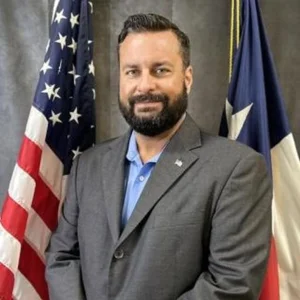
Municipal infrastructure is becoming more complex, but the tools available to inspect and manage it are becoming more advanced as well. Technologies like LiDAR, drone-based mapping, remote sensing, and artificial intelligence are giving cities faster, safer, and more detailed ways to understand their infrastructure than ever before. In Episode 75 of The Clear Voice, James Groom sat down with Craig Kerkhoff, PE, and Dr. Robert Hendricks of Birkhoff, Hendricks & Carter (BHC) to discuss how these technologies are helping municipalities improve decision making while reducing survey time and increasing safety.
From Ancient Civilizations to Modern Cities
If you've read stories about archaeologists discovering lost cities beneath dense jungle canopies, you've already seen LiDAR in action.
The same technology used to uncover ancient civilizations in Central and South America is now helping municipalities inspect roads, drainage systems, utilities, and other critical infrastructure.
Dr. Robert Hendricks explained that while the application has changed, the technology has not. Modern LiDAR systems simply collect millions of incredibly precise measurements every second, allowing engineers to create detailed three-dimensional models of the physical world.
Instead of searching for ancient ruins, today's engineers are helping cities better understand the infrastructure residents depend on every day.
What Is LiDAR?
LiDAR, which stands for Light Detection and Ranging, uses lasers to measure millions of points every second. Those measurements are combined into an incredibly accurate three-dimensional "point cloud" that creates a digital representation of the physical world.Unlike traditional field surveys that collect measurements at specific locations, LiDAR captures an enormous amount of information across an entire project area. Engineers can use that information to build detailed maps, analyze existing conditions, and create engineering designs with greater efficiency.
Why Municipalities Are Using LiDAR
For cities, speed and safety matter. Traditional roadway surveys often require personnel to work in traffic while collecting measurements over several weeks. Drone-based LiDAR allows engineers to collect significantly more data in a fraction of the time while keeping survey crews out of dangerous environments. The technology can also be used to inspect: Roadways, Drainage systems, Creeks and channels, Water and wastewater infrastructure, Elevated storage tanks, Utilities, and Municipal facilities. Because the information is collected digitally, the same dataset can often support multiple future projects instead of being used only once.
Beyond Mapping: Creating Digital Twins
One of the most exciting concepts discussed during the episode is the creation of digital twins. A digital twin is a highly accurate digital model of existing infrastructure that engineers and municipalities can continue using long after the original survey is complete. Instead of collecting the same information repeatedly, cities can reference existing datasets to plan projects, evaluate assets, and make better long-term infrastructure decisions. As these digital models grow, they become valuable resources for engineering, planning, public works, and asset management.
Faster Projects. Safer Employees.
One of the biggest advantages of drone-based LiDAR isn't simply speed. It's safety.
Traditional field surveys often require crews to work in busy roadways while collecting measurements over several weeks. LiDAR allows engineers to gather dramatically more information while keeping people out of traffic and reducing the amount of time spent in the field.
Craig Kerkhoff shared one example where a survey that traditionally could have taken more than a month was completed in about a week using drone technology.
For municipal leaders trying to move projects forward, those time savings can have a significant impact.
Where Artificial Intelligence Fits In
Artificial intelligence becomes much more powerful when it has accurate digital information to analyze. During the conversation, Craig and Dr. Hendricks explained how BHC is already developing tools that can automatically identify municipal assets such as fire hydrants, manholes, valves, signs, and pavement conditions from LiDAR and aerial imagery. As AI continues to evolve, these technologies may help cities prioritize maintenance, monitor infrastructure conditions, and improve long-term capital planning with far greater efficiency.
The Next Step Isn't Better Maps. It's Better Decisions.
One of the most insightful moments of the discussion centered on the difference between data, information, and understanding. Collecting data alone does not solve problems. When information is organized and combined with engineering expertise, it becomes a tool that helps municipal leaders make informed decisions about infrastructure investments, maintenance priorities, and future growth. That philosophy extends well beyond engineering and serves as an important reminder for leaders in every profession.
Dr. Hendricks described a hierarchy that every leader can appreciate:
Data becomes information. Information becomes understanding. Understanding leads to better decisions.
Collecting more information has little value if it isn't organized into something useful. Whether managing infrastructure, leading employees, or planning capital improvements, better decisions begin with better information.
That leadership lesson extends far beyond engineering.
Contact for BHC
If you're a city manager, public works director, engineer, elected official, or anyone interested in the future of municipal infrastructure, this episode offers an excellent look at how emerging technology is already changing the way cities operate.
Interested in learning more about BHC and their municipal engineering services?
Visit https://bhcllp.com or contact Craig Kerkhoff at ckerkhoff@bhcllp.com.
About The Clear Voice Podcast
The Clear Voice is a dedicated platform for transparency and expert led dialogue within the professional and public sectors. The show serves as a vital resource for leaders who want to move past surface level discussions and dive into the real world mechanics of governance, management, and organizational growth. James Groom is the host of the program. As the Vice President of Clear Career Professionals and a retired Police Chief, James brings a unique, high stakes perspective to every conversation. His background in public service and executive leadership allows him to extract practical, actionable insights from industry experts that help modern organizations function with total clarity.
Our Core Focus Areas
Executive Leadership: Exploring the transition from technical competence to high level strategic management.
Organizational Transparency: Discussing the importance of open communication and accountability in public and private leadership.
Governance and Strategy: Breaking down the complex decision making processes that drive successful communities and organizations.
Professional Development: Insights on coaching, culture building, and high performance team management.
About Clear Career Professionals
Clear Career Professionals is a specialized recruitment and strategic consulting firm focused on the public sector. We believe that the strength of any municipality or school district lies in the quality of its leadership and the cohesion of its teams.Our team is comprised of former practitioners and retired executives who understand the nuances of public service. We provide organizations with more than just a list of candidates; we provide the strategic oversight and expertise necessary to navigate transitions, maximize taxpayer funds, and implement long term solutions.
Our Strategic Services
Executive Search and Recruitment: A tailored approach to identifying top tier talent for leadership roles in cities and school districts.
Interim Leadership: Providing experienced professionals to guide organizations through critical periods of transition.
Governance and Board Training: Specialized sessions designed to strengthen board relations and help leadership teams function as a unified School Board or City Council & Executive Team.
Shared Solutions Initiative: A program focused on fostering collaboration between municipalities and schools to address shared community challenges.
Connect With Us
Visit our official website to explore current job opportunities or to learn more about our leadership services: clearcareerpro.com.
Follow us for more updates:
Career Opportunities: https://clearcareerpro.com/career-opportunities/
Recruitment Services: https://clearcareerpro.com/recruitment/
Services: https://clearcareerpro.com/all-services/
Clear News: https://clearcareerpro.com/clear-news
The Clear Voice Podcast: https://clearcareerpro.com/the-clear-voice/
LinkedIn: https://linkedin.com/company/clear-career-pro
Facebook:Clear Career Professionals @ClearCareerPro