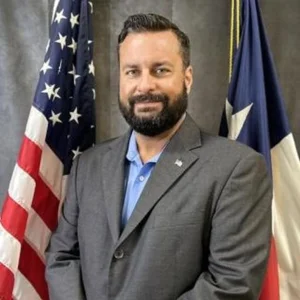
Leadership Lessons from a Lifetime of Service | Bryan Lockerby
A conversation about law enforcement leadership, city management, organizational health, and doing the right thing for the right reason.
Bryan Lockerby has spent more than four decades in public service, with a career that has moved through local law enforcement, statewide criminal investigations, executive leadership, city management, and organizational consulting.In this episode of The Clear Voice, Bryan joined James Groom and Michael Boese for a wide-ranging conversation about leadership, law enforcement, Montana, rural policing, organizational assessments, and the lessons that only come from years of doing the work.
Clarity, Discipline, and Courage
Bryan opened the conversation with three leadership principles that have shaped his approach: clarity of purpose, discipline in action, and courage in decision-making.Those principles are especially important in public service, where leaders are often operating in a volatile and uncertain environment. Budgets change. Politics shift. Staffing challenges continue. Community expectations evolve. In the middle of all of that, people still need direction.Bryan emphasized that leaders must help their people understand not only what needs to be done, but why it matters. Without that clarity, organizations drift. With it, people have a better chance of staying focused on the mission.
The Shopping Cart Test
One of the most memorable moments in the conversation was Bryan’s “shopping cart test.”Most people have faced the simple choice of whether to return a shopping cart or leave it behind. There may not be a law requiring someone to return it. There may not be a supervisor watching. But the decision still says something about character.For Bryan, that example points to a larger leadership issue. Leaders cannot be everywhere all the time. They have to build organizations where people are trusted to make good decisions, even when nobody is watching.That kind of culture does not happen by accident. It requires clear expectations, ethical grounding, consistency, and leaders who model the behavior they expect from others.
Law Enforcement Has Changed
Bryan began his law enforcement career in a very different era. The equipment was simpler. The technology was limited. The expectations were different.Today’s officers operate in a far more complex environment. They carry more tools, face more scrutiny, respond to a broader range of social issues, and are expected to handle everything from criminal activity to mental health calls, trauma, medical aid, technology, and community engagement.Bryan made the point that the job is harder today. Not because the people serving are less capable, but because the environment has become more complicated.
Rural Law Enforcement and Resource Gaps
A major theme of the episode was the difference between larger agencies and smaller rural departments.Bryan described the reality of Montana law enforcement, where some counties are extremely rural, staffing is limited, budgets are tight, and agencies may not have the same access to technology, training, or specialized resources that larger departments take for granted.That does not mean those agencies lack commitment. In many cases, rural law enforcement officers have deep relationships in their communities and understand their people extremely well. But the resource gap is real, and it affects training, investigations, technology, staffing, and officer support.
Relationships Still Matter
Even with all the changes in law enforcement, Bryan and Michael both emphasized the importance of relationships.Technology matters. Training matters. Equipment matters. But law enforcement still depends heavily on trust, legitimacy, and local relationships.That is especially true in smaller communities, where officers and deputies often know the people they serve personally. Those relationships can help solve problems, calm tense situations, and build credibility before a crisis occurs.
Officer Trauma and the Weight of the Job
The conversation also turned to officer trauma, including anticipatory and secondary trauma.Bryan explained that trauma is not limited to the moment an officer arrives at a critical incident. It can begin while responding to the call, as the officer imagines what they may encounter. Dispatchers and other personnel can experience that trauma as well, even if they never physically go to the scene.This is an area where public safety leaders must continue to pay attention. Critical incident debriefings matter, but leaders also need to understand the cumulative impact of repeated exposure to traumatic calls, stress, and uncertainty.
From DCI to City Management
Bryan also shared his experience leading Montana’s Division of Criminal Investigation, which included major case investigations, the state police academy, criminal records, human trafficking, missing persons, crime victim services, AMBER alerts, criminal intelligence, and work with tribal communities.After retiring from state service, Bryan was quickly pulled back into public service as an interim deputy city manager in Great Falls. That role gave him a different view of municipal government and helped reinforce how many leadership skills transfer across departments.Public works, parks and recreation, police, fire, planning, and administration all have different missions, but they share many of the same leadership challenges: budgets, staffing, communication, expectations, and people.
Organizational Health Requires Systems
Bryan also discussed organizational assessments and the value of helping agencies step back and look honestly at their operations.One of his key points was that organizations need a “North Star.” They need systems, values, expectations, and processes that help guide people even when leadership changes or difficult issues arise.Short-term fixes rarely solve long-term organizational problems. Removing one person, changing one policy, or reacting to one crisis may provide temporary relief, but healthy organizations require sustainable systems.Michael added that outside assessments can be valuable because leaders are sometimes too close to the problem. An outside perspective can help identify communication breakdowns, blind spots, structural issues, and opportunities for improvement before they become major failures.
Final Advice for Leaders
Bryan closed the episode by returning to the basics: do the right thing for the right reason, stand firm in the face of adversity, give people grace, and be willing to mentor the next generation.Leadership is not just about holding a title. It is about preparing others to carry the work forward.As Bryan put it, today’s leaders will not be around forever. Part of the responsibility of leadership is helping others become ready to pick up the pieces and continue serving well.
Learn more about Bryan Lockerby and Lockerby Leadership Group
About The Clear Voice Podcast
The Clear Voice is a dedicated platform for transparency and expert led dialogue within the professional and public sectors. The show serves as a vital resource for leaders who want to move past surface level discussions and dive into the real world mechanics of governance, management, and organizational growth. James Groom is the host of the program. As the Vice President of Clear Career Professionals and a retired Police Chief, James brings a unique, high stakes perspective to every conversation. His background in public service and executive leadership allows him to extract practical, actionable insights from industry experts that help modern organizations function with total clarity.
Our Core Focus Areas
Executive Leadership: Exploring the transition from technical competence to high level strategic management.
Organizational Transparency: Discussing the importance of open communication and accountability in public and private leadership.
Governance and Strategy: Breaking down the complex decision making processes that drive successful communities and organizations.
Professional Development: Insights on coaching, culture building, and high performance team management.
About Clear Career Professionals
Clear Career Professionals is a specialized recruitment and strategic consulting firm focused on the public sector. We believe that the strength of any municipality or school district lies in the quality of its leadership and the cohesion of its teams.Our team is comprised of former practitioners and retired executives who understand the nuances of public service. We provide organizations with more than just a list of candidates; we provide the strategic oversight and expertise necessary to navigate transitions, maximize taxpayer funds, and implement long term solutions.
Our Strategic Services
Executive Search and Recruitment: A tailored approach to identifying top tier talent for leadership roles in cities and school districts.
Interim Leadership: Providing experienced professionals to guide organizations through critical periods of transition.
Governance and Board Training: Specialized sessions designed to strengthen board relations and help leadership teams function as a unified School Board or City Council & Executive Team.
Shared Solutions Initiative: A program focused on fostering collaboration between municipalities and schools to address shared community challenges.
Connect With Us
Visit our official website to explore current job opportunities or to learn more about our leadership services: clearcareerpro.com.
Follow us for more updates:
Career Opportunities: https://clearcareerpro.com/career-opportunities/
Recruitment Services: https://clearcareerpro.com/recruitment/
Services: https://clearcareerpro.com/all-services/
Clear News: https://clearcareerpro.com/clear-news
The Clear Voice Podcast: https://clearcareerpro.com/the-clear-voice/
LinkedIn: https://linkedin.com/company/clear-career-pro
Facebook:Clear Career Professionals @ClearCareerPro