HR Serves the People Who Serve the Community
Matt Wright on Employee Retention, Organizational Culture, and Leadership in Local Government
Employee retention continues to be one of the most pressing challenges facing local governments. Police departments are not alone. Public works departments, finance departments, fire departments, and other municipal operations are all feeling the pressure of recruiting and keeping quality employees.
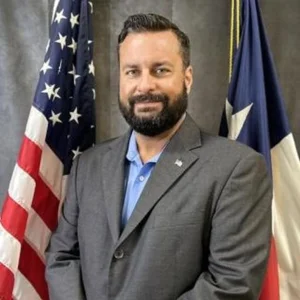
In this episode of The Clear Voice, James Groom sits down with Matt Wright, Human Resources Director for the City of Buda, Texas, to discuss why good employees leave, why organizational culture matters, and how leaders can better serve the people who serve the community.
Matt brings a unique perspective to municipal human resources. Before becoming HR Director in Buda, he spent more than two decades with the Austin Police Department, serving in patrol, community engagement, training, investigations, internal affairs, risk management, and leadership roles. That experience shaped the way he views HR, leadership, fairness, and employee support in public service.
Why Good Employees Leave Local Government
When local governments talk about retention, the conversation often starts with pay. Compensation matters, and Matt acknowledges that some employees will leave for more money. However, he argues that money is not always the primary reason good employees walk out the door.
In many cases, the larger issue is culture.
Employees in public service are often asked to do more with less. They grind through difficult work, serve the public, respond to problems, and keep essential services moving. But when they do not feel valued, heard, or respected, disengagement begins.
For local governments, this creates a serious operational problem. The employees who feel ignored internally are the same employees expected to provide excellent service externally. When the organization fails to take care of its people, the community eventually feels the impact.
Culture Matters as Much as Compensation
Matt explains that public service organizations are naturally externally focused. Elected officials are focused on the community. City managers are focused on council direction and public expectations. Departments are focused on service delivery.
That external focus is necessary, but it can also cause leaders to lose sight of the employees carrying out the mission every day.
Public works employees fixing water lines in the Texas heat, police officers responding to calls, finance staff keeping the organization running, and HR staff helping employees navigate challenges all contribute to the larger mission of local government. Leaders have to help employees see that connection.
When employees understand how their work matters, and when they feel valued by the organization, culture becomes a retention tool.
Serving the Employees Who Serve the Community
One of Matt’s central messages is that HR serves the people who serve the community.
That idea applies beyond the HR department. Supervisors, department heads, city managers, and elected officials all influence the way employees experience the organization. A positive interaction with a leader can affect how an employee approaches the next citizen, resident, customer, or coworker.
In public service, leadership is not just about managing tasks. It is about setting people up to serve well.
Matt explains that every interaction with an employee is an opportunity to serve that person in a way that helps them show up better for the public. That may mean listening before reacting, asking whether someone is okay before moving to discipline, or helping an employee connect their daily work to the greater mission.
Recognizing Employee Disengagement
Employee disengagement does not always happen overnight. Matt describes it as a gradual pulling back.
A good employee may begin using more leave, showing up a few minutes late, or losing the energy they once brought to the job. Too often, supervisors respond first with discipline instead of curiosity.
That does not mean accountability disappears. It means the first question may need to be, “Are you okay?”
By starting with the human being before moving directly to the performance issue, leaders may uncover burnout, personal struggles, unclear expectations, or organizational problems that can still be addressed. Ignoring those signs can allow disengagement to deepen until the employee leaves completely.
From Law Enforcement to Human Resources
Matt’s move from policing to HR may seem unusual at first, but the connection becomes clear throughout the conversation.
Law enforcement is fundamentally about people. Officers deal with human behavior, conflict, crisis, communication, and problem-solving every day. Supervisors and command staff also navigate policy, accountability, investigations, leadership, and employee performance.
Matt’s experience in internal affairs, training, risk management, and police leadership helped prepare him for the human side of HR. While the technical aspects of HR, especially benefits, brought a steep learning curve, many of the core leadership skills translated well.
His path also challenges assumptions about what police professionals can bring to other areas of municipal leadership.
Organizational Justice in Public Service
A major part of the episode focuses on organizational justice.
Matt explains organizational justice as the way an organization treats its employees. He breaks it into three important concepts:
Procedural fairness: decisions are clearly explained and transparent.
Distributive fairness: outcomes are equitable, not necessarily identical.
Interactional justice: supervisors treat employees with dignity and respect.
These principles may sound simple, but they are often difficult to practice consistently. For Matt, organizational justice is not created by a single policy or one-time training. It is built through daily interactions.
Every conversation is an opportunity for leaders to be transparent, fair, respectful, and consistent. Over time, those interactions shape culture.
Internal Fairness Affects External Service
James and Matt also connect organizational justice to procedural justice, a concept familiar to many in law enforcement. Procedural justice is often discussed in terms of how police officers treat the public: giving people a voice, being transparent, making fair decisions, and treating people with dignity.
Matt argues that organizations should apply the same thinking internally.
If municipalities expect employees to treat the public with dignity and respect, the organization must model that same behavior with employees. Internal culture and external service are connected. Employees who are treated fairly are better positioned to treat the public fairly.
Dignity, Emotional Regulation, and Leadership
The conversation also explores emotional regulation in leadership. Leaders often face frustrating situations, especially during budget season, personnel challenges, operational stress, or public criticism.
Matt and James discuss the importance of slowing down before reacting. In many leadership situations, there is time to pause, recognize the emotion, and choose a better response.
That discipline matters because leaders set the tone. A supervisor’s reaction can either escalate a problem or create space for a productive conversation.
Whether in police leadership, HR, public works, or city management, dignity should remain central to how people are treated.
Using Technology to Improve Communication
The episode also touches on the practical use of AI tools in leadership communication. Matt shares how tools like ChatGPT can help leaders reframe messages, reduce unnecessary emotion, and tailor communication to the person receiving it.
For example, a long or complex email may not land well with every employee. AI can help simplify, restructure, or clarify a message so the intended meaning is easier to understand.
The goal is not to replace human judgment. The goal is to communicate more effectively.
A Final Takeaway for Leaders
Matt’s final takeaway is simple: leaders get to decide how they show up in the next interaction.
That applies professionally and personally. Leaders cannot control every situation, every employee reaction, or every external pressure. But they can control how they respond.
In local government, where the work is personal, stressful, and mission-driven, that choice matters.
The way leaders treat employees affects the way employees serve the community. HR serves the people who serve the community, and strong leadership does the same.
Connect with Matt Wright on Linkedin
About The Clear Voice Podcast
The Clear Voice is a dedicated platform for transparency and expert led dialogue within the professional and public sectors. The show serves as a vital resource for leaders who want to move past surface level discussions and dive into the real world mechanics of governance, management, and organizational growth. James Groom is the host of the program. As the Vice President of Clear Career Professionals and a retired Police Chief, James brings a unique, high stakes perspective to every conversation. His background in public service and executive leadership allows him to extract practical, actionable insights from industry experts that help modern organizations function with total clarity.
Our Core Focus Areas
Executive Leadership: Exploring the transition from technical competence to high level strategic management.
Organizational Transparency: Discussing the importance of open communication and accountability in public and private leadership.
Governance and Strategy: Breaking down the complex decision making processes that drive successful communities and organizations.
Professional Development: Insights on coaching, culture building, and high performance team management.
About Clear Career Professionals
Clear Career Professionals is a specialized recruitment and strategic consulting firm focused on the public sector. We believe that the strength of any municipality or school district lies in the quality of its leadership and the cohesion of its teams.Our team is comprised of former practitioners and retired executives who understand the nuances of public service. We provide organizations with more than just a list of candidates; we provide the strategic oversight and expertise necessary to navigate transitions, maximize taxpayer funds, and implement long term solutions.
Our Strategic Services
Executive Search and Recruitment: A tailored approach to identifying top tier talent for leadership roles in cities and school districts.
Interim Leadership: Providing experienced professionals to guide organizations through critical periods of transition.
Governance and Board Training: Specialized sessions designed to strengthen board relations and help leadership teams function as a unified School Board or City Council & Executive Team.
Shared Solutions Initiative: A program focused on fostering collaboration between municipalities and schools to address shared community challenges.
Connect With Us
Visit our official website to explore current job opportunities or to learn more about our leadership services: clearcareerpro.com.
Follow us for more updates:
Career Opportunities: https://clearcareerpro.com/career-opportunities/
Recruitment Services: https://clearcareerpro.com/recruitment/
Services: https://clearcareerpro.com/all-services/
Clear News: https://clearcareerpro.com/clear-news
The Clear Voice Podcast: https://clearcareerpro.com/the-clear-voice/
LinkedIn: https://linkedin.com/company/clear-career-pro
Facebook:Clear Career Professionals @ClearCareerPro