Why the worst two years of my life became a book
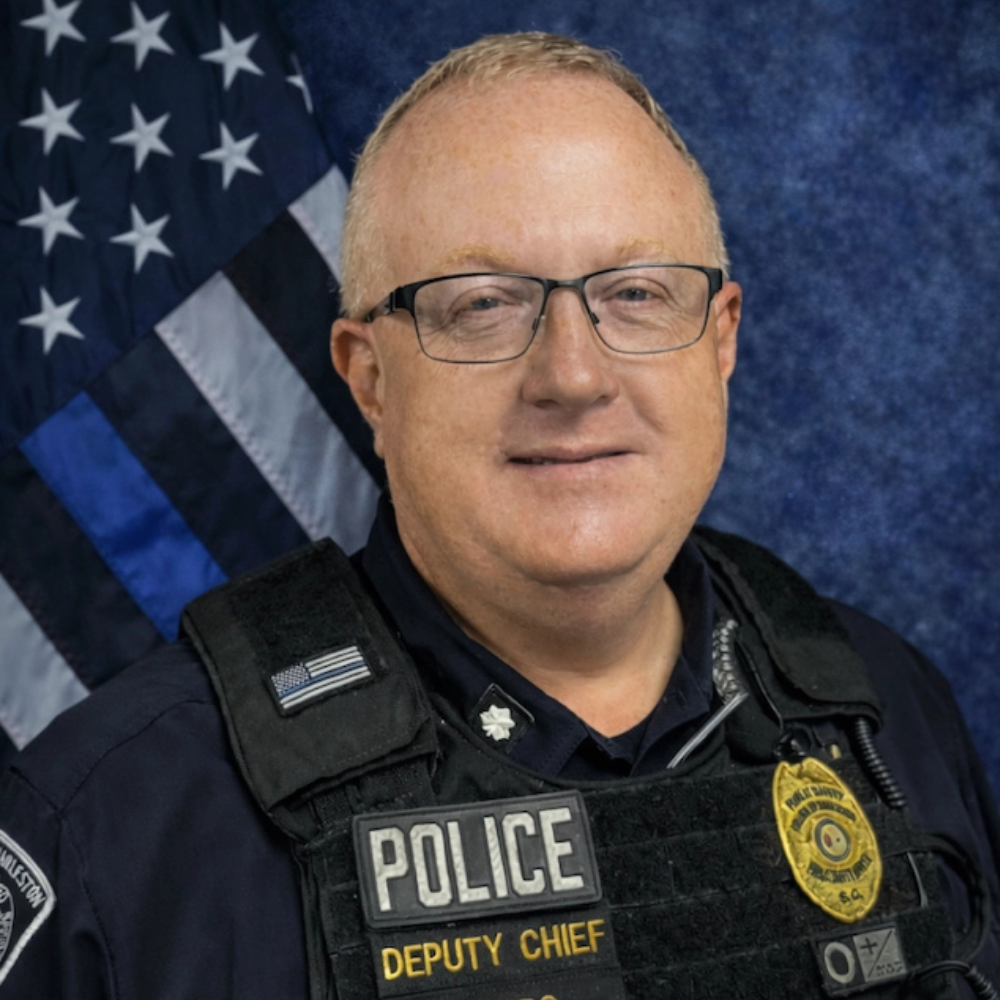
Arthur W. “Rusty” Myers III has spent more than three decades in law enforcement, serving in roles from patrol private to Deputy Chief that have shaped not only his career, but also his understanding of leadership, accountability, officer wellness, and institutional responsibility.
A graduate of The Citadel and Liberty University, Myers began his law enforcement career with a commitment to public service that would carry him through patrol, supervision, training, investigations, internal affairs, and command leadership. Over the course of his career, he has served twenty-three years with the Charleston Police Department. Two at the Summerville Police Department, and currently serves as Deputy Chief of Police at a South Carolina university.
As the Commander of Professional Development and Training for the Charleston Police Department for five years, Myers has been closely involved in the work that often defines a police organization from the inside: training officers, supervising critical incidents, active aggressor training, strengthening policy, building leadership programs, managing internal investigations, supporting accreditation, and helping agencies prepare for the moments no one wants to face but every public safety organization must be ready to handle.
His work has included patrol leadership, investigations, fleet and operational planning, training development, peer support, emergency preparedness, and organizational improvement. At the University, Myers has helped advance initiatives connected to officer readiness, active aggressor response, campus safety education, leadership development, and professional accountability.
But the most significant story Myers now shares publicly is not simply about rank, assignments, or career milestones. It is about what happened when the system he had served became the source of one of the most painful chapters of his life.
That experience became the foundation for his book, Tattered: When the Blue Line Frays.
Tattered is a deeply personal and very raw account of what can happen to a solid “it will never happen to me” officer after a simple foot pursuit, especially when the incident is followed by administrative pressure, internal investigation, organizational silence, administrative leave, and a loss of identity. It is not written from a distance. It is written from deep inside the experience. It recounts his use of alcohol to “quiet the loop” every day. How digging out a pool in his yard gave him purpose and helped him focus his anger. And it recounts the day his bride of 31 years ordered him to get help before he “did something stupid.”
It recounts the counseling he sought and the hidden PTSI that came out during it. Every officer carries a backpack full of trauma. Sometimes the call adds a grain of sand or a pebble. The incident Myers’ details in Tattered was a rock in a backpack that was already full of trauma. The Mother Emmanuel shooting. The Sofa Super Store fire. Suicides of comrades and the murder of fellow officers had all been building. In addition to the weight every officer carries from every call.
Myers’ backpack was exploding.
Myers wrote Tattered because he knows there are officers, deputies, troopers, dispatchers, veterans and first responders who understand the street, the danger, the trauma, and the pressure, but who are far less prepared for what can happen after the incident is over. Incidents where we have no control are not trained for, and can be the worst. The investigation. The isolation. The uncertainty.
The way a career, reputation, and identity can feel as if they are being rewritten while the officer is still trying to understand what happened.
The purpose of the book is not revenge. It is not anger for the sake of anger. It is not a complaint about accountability. Myers believes in accountability. He believes in truth, process, leadership, and doing the hard work the right way. We are the police in a country whose main principle is freedom. We should be held to a higher standing as those who can take that freedom away. Even to take a life.
Tattered also deals with the emotional side of people called friends who let him down. It details the journey to forgiveness when he realized that forgiveness is for you. Forgiveness heals you.
The reason he wrote Tattered is that accountability without humanity can destroy people. Concern over optics can replace evidence and truth. Process without truth can become narrative. And narratives can drift. Silence from leaders can become its own decision. And officers in crisis are often left alone at the very moment they most need someone to step toward them.
At the heart of Tattered is a simple but urgent message: we cannot train officers only for the street and ignore what happens after. Agencies train for use of force, active threats, pursuits, critical incidents, and courtroom testimony. But too often, they do not train officers, supervisors, or command staff for the emotional and organizational aftermath of a career-threatening incident. Officers are left to put the rock in their PTSI backpack and answer the next call.
Myers wrote the book for the officer sitting in the driveway who does not know whether he can walk back into his house. He wrote it for the officer who has been cleared criminally but still feels condemned professionally. He wrote it for the spouse who does not know what to say, and the officer who cannot tell that spouse “I need help.”
He wrote it for the chief, sheriff, supervisor, FTO, chaplain, peer-support member, FOP lodge, academy director, and command staff member who may one day have the opportunity to reach someone before silence wins.
The book also challenges law enforcement leaders to examine their own responsibilities. Leadership is not only tested in press conferences, tactical decisions, or public moments. It is tested in quiet rooms, behind closed doors, during internal investigations, and in the way organizations treat people when the outcome is uncertain and the pressure is high.
One of Myers’ central leadership beliefs is: “Leadership is making a decision before silence makes it for you.”
That idea runs throughout Tattered. Silence, in moments of organizational stress, is rarely neutral. Silence can isolate. Silence can allow rumors to harden into accepted truth. Silence can allow the narrative to drift. Silence can leave an officer believing they have already been abandoned and condemned. In those moments, leadership requires action. Not interference with an investigation, not avoidance of accountability, but the courage to preserve dignity, humanity, fairness, and communication while the process unfolds. The courage to look beyond what one sees at the evidence and to avoid assuming something because of political pressure or fear.
Tattered also speaks directly to officer wellness. The book addresses the painful reality that officers often endure career trauma in silence. Many are trained to push through, compartmentalize, and remain functional. But administrative trauma, betrayal, isolation, and loss of professional identity can be just as dangerous as the incident itself. For some, it can become a life-and-death struggle.
Myers also details the members of the line who kept him together. The original title of the book was "Tattered: When the Blue Line Fails." But as he wrote and recounted the instances of those who supported him, he realized many were retired police, former officers, veterans, and people who held the line together. So, fails became frays. Because men and women who knew and believed in him conspired to keep him here. They kept the line from failing.
Myers has been clear that the mission of the book is not simply to sell copies. The mission is to get the book in front of the people who need it: officers in crisis, leaders responsible for them, and organizations willing to have difficult conversations before the next tragedy occurs. If that is you, get in touch with him.
He will get it in front of you.
Tattered is a warning, but it is also a lifeline. It tells officers that the worst day of their career does not have to be the final chapter of their life. Do not make a permanent decision over a temporary problem. It tells leaders that process and compassion are not opposites. It reminds agencies that truth matters, words matter, timelines matter, evidence matters, and most importantly and people matter.
For Myers, the book is also a story of survival, faith, purpose, and return. His career did not end in that dark chapter. He was exonerated and continued to serve, first as an internal affairs inspector (appreciate the irony) and now as a Deputy Chief. He continued to lead. He continued to teach. And he now uses that experience to speak more directly about the responsibilities law enforcement has to its own people. We forget our officers are citizens too, and we swore an oath to protect them.
In writing Tattered, Myers turned one of the most painful experiences of his life into a tool for others. His hope is that a chief will hand it to a command staff member, a peer-support coordinator will hand it to an officer, a spouse will better understand what their loved one is carrying, and an officer in crisis will realize that the sun will rise tomorrow.
Stay in the fight.
The blue line is thin enough.
Resources
Tattered is available on Amazon
Email: tatteredreaders@gmail.com