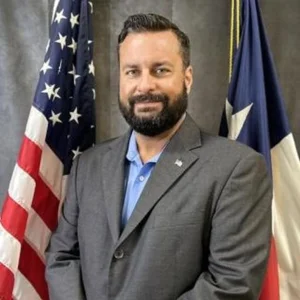
A Conversation with Ben Jarrett of Next Meters USA
Water utilities are responsible for delivering one of the most essential services in any community, but many still rely on aging meters, manual reading processes, and limited usage data.
Ben Jarrett, Regional Sales Director for Next Meters USA, believes modern water metering does not have to be complicated.
In Episode 76 of The Clear Voice, Ben joined James Groom to discuss how smart water meters can help cities identify leaks, reduce water loss, improve customer service, and make better long-term infrastructure decisions.
He also shared the unusual career journey that took him from professional bass fishing to the water utility industry.
From Professional Bass Fishing to Water Utilities
Ben’s career has always revolved around water.
He grew up fishing with his father and grandfather before attending Stephen F. Austin State University in East Texas. With Sam Rayburn Reservoir and Toledo Bend nearby, fishing became an even larger part of his life.
After college, Ben pursued professional bass fishing and traveled across the country competing in tournaments. The lifestyle was not always glamorous. Between events, he took on jobs ranging from roofing a high school auditorium to pushing shopping carts at Walmart so he could afford fuel and tournament expenses.
His success eventually led to an opportunity with Skeeter Boats, where he worked in marketing and public relations. He remained in the marine industry for more than 20 years before transitioning into water meter technology.
The common thread throughout his career has been water.
“If I can float on it in a boat, I can measure it through a pipe for a city,” Ben joked during the conversation.
What Fishing Taught Ben About Work Ethic
Ben’s years in professional fishing taught him that preparation, resilience, and self-motivation matter in any profession.
He competed against fishermen he had grown up watching on television and reading about in magazines. When he began finishing ahead of some of those childhood heroes, he realized he had answered an important personal question.
He knew he was capable of competing at that level.
That realization helped him confidently move into the next phase of his career when Skeeter Boats offered him a full-time position.
Ben said the people who consistently prepare, work hard, and push themselves tend to rise, regardless of the industry. Those qualities are just as important in municipal utilities as they are in competitive fishing.
Conservation Connects Fishing and Water Management
Fishing also gave Ben an early appreciation for conservation.
Professional anglers often participate in habitat restoration, lake cleanup projects, fish stocking initiatives, and other programs designed to protect waterways and sustain fisheries.
That same stewardship mindset applies to municipal water systems.
Communities depend on reliable water sources, but those resources are limited and are replenished only as quickly as nature allows. Utilities therefore need accurate information about how much water they are distributing, how much customers are using, and how much may be lost through leaks or aging infrastructure.
Smart water meters can play an important role in that work.
Why Aging Water Meters Create Problems
Traditional mechanical water meters contain internal components that wear down over time.
As meters age, they often begin to under-register lower levels of water usage. Small amounts of water may pass through without being accurately recorded, especially when internal gears and measuring components become worn.
For a utility, that can mean water is being treated, pumped, and delivered without being fully billed.
Inaccurate meters also weaken the data cities depend on for water rate studies, revenue projections, infrastructure planning, and system management.
A utility cannot make reliable decisions with unreliable information.
Modern ultrasonic meters remove many of those mechanical limitations. Because they have no moving internal parts, they can maintain accuracy at low flow rates and over longer periods.
How Smart Water Meters Identify Leaks Faster
One of the clearest benefits of smart water metering is the ability to detect abnormal water use much sooner.
Under a manual reading system, a meter may only be checked once each month. By the time a customer receives a high bill, the leak may have been occurring for several weeks.
Smart meters can monitor usage continuously and send information back to utility software through radio frequency or cellular networks.
That allows utilities to receive alerts for issues such as:
Continuous water flow
Excessive usage
Sudden increases in consumption
Usage patterns outside normal customer behavior
Potential leaks
Ben explained that some smart meter systems can detect an abnormal event and send an alert within minutes.
That creates an opportunity for the utility or customer to investigate before a small problem becomes a major water loss or an unexpectedly large bill.
Small Leaks Can Create Large Bills
Many customers assume that high water bills must be caused by a major pipe break, but smaller problems can waste significant amounts of water over time.
A running toilet, leaking swimming pool, dripping outdoor faucet, or malfunctioning commercial ice machine may continue using water without being immediately visible.
Ben noted that smart meter data can reveal usage patterns that would otherwise remain hidden.
A homeowner may not notice a slow leak in a garden hose because the water evaporates before reaching the end. A pool may automatically refill to compensate for a leak, making the problem look like normal evaporation.
Smart meter alerts help make that invisible usage visible.
Improving Water Utility Customer Service
Unexpected water bills often lead to difficult conversations between customers and utility employees.
With manual meters, there may be questions about whether the meter was read correctly, whether the number was entered properly, or when the unusual usage began.
Smart metering provides a clearer record.
Utilities can view detailed usage data, identify when consumption changed, and confirm whether alerts were sent to the customer.
Customers may also be able to access a portal that allows them to monitor their own usage and establish personalized alerts.
For example, a customer could choose to receive a notification whenever usage exceeds a certain percentage above their normal 30-day average.
This level of transparency can reduce disputes and help customers take responsibility for addressing leaks or unusual consumption.
Giving Public Works Employees Time Back
Manual meter reading can consume several days of staff time each month.
For smaller cities, meter reading duties often fall to public works employees who are also responsible for streets, parks, water towers, hydrants, valves, cemeteries, easements, and other essential infrastructure.
Automated meter reading allows those employees to focus on work that may otherwise be delayed.
That could include exercising valves, inspecting hydrants, performing preventive maintenance, addressing infrastructure problems, and completing other long-term system needs.
Smart metering does not eliminate the need for staff. It helps utilities use limited staff time more effectively.
Moving Beyond Drive-By Meter Reading
Utilities moving away from manual meters may initially consider a drive-by reading system.
Drive-by systems are a meaningful improvement because employees no longer need to physically inspect every meter. However, they are still primarily designed to collect billing reads at scheduled intervals.
Advanced Metering Infrastructure, commonly called AMI, provides much more frequent data and allows utility employees to monitor the system from the office.
Ben encouraged cities to think beyond the monthly billing process.
The real value of smart metering is not simply producing 12 accurate bills each year. It is having access to timely data that can support water conservation, customer service, system maintenance, and business decisions.
Choosing the Right Smart Metering System
Utilities should evaluate more than the meter itself when selecting a system.
The meter collects the information. The communication device transmits it. The software determines how easily utility employees can understand and use the data.
Ben encouraged cities to spend significant time reviewing the software platform and customer portal before making a decision.
Important questions include:
Is the software easy for employees to navigate?
Can staff quickly identify leaks and unusual usage?
Are reports clear and useful?
Does the system integrate with existing billing software?
Can customers access their own information?
Is the technology scalable?
What training and ongoing support are provided?
Can the system use radio frequency, cellular service, or both?
The best technology is not necessarily the system with the longest list of features. It is the one employees can confidently operate and maintain.
Implementing Smart Meters in Phases
Cities do not always need to replace every meter at once.
Modern smart metering systems can often be installed in phases, allowing utilities to spread costs over time and begin learning from the technology before completing a full deployment.
Installation planning typically considers the utility’s existing meter-reading and billing schedule. Commercial customers, hospitals, restaurants, and other high-use locations may require carefully scheduled replacements to minimize service disruptions.
Training is also critical.
Utility employees need to understand how to maintain the system, add or replace meters, protect data integrity, interpret reports, and communicate with customers after the transition.
A new meter may record usage more accurately than the older device it replaced. That can lead to customer concerns when bills increase, even though the new bill reflects actual usage more accurately.
Preparing employees for those conversations is part of a successful implementation.
Making Smart Water Beautifully Simple
At the Next Meters headquarters in Providence, Utah, one phrase captures the company’s approach:
“Beautifully simple.”
Water meter automation has traditionally been viewed as complicated, disruptive, and difficult to manage.
Next Meters is focused on simplifying the process by combining smart meters, communication technology, software, training, and customer support into a system utilities can use with confidence.
Ben compared the experience to opening a new smartphone. The technology may be advanced, but the user should not need an extensive instruction manual to begin using it.
For municipal utilities facing water scarcity, aging infrastructure, staffing challenges, and growing customer expectations, simplicity matters.
Smart water technology is most valuable when it helps employees make faster decisions, protect resources, communicate clearly, and serve their communities more effectively.
Connect with Ben Jarrett
Ben Jarrett
Regional Sales Director, Next Meters USA
LinkedIn: https://www.linkedin.com/in/ben-jarrett-288969108/
Email: bjarrett@nextmeters.com
Phone: 903-387-3550
Learn More About Next Meters
About The Clear Voice Podcast
The Clear Voice is a dedicated platform for transparency and expert led dialogue within the professional and public sectors. The show serves as a vital resource for leaders who want to move past surface level discussions and dive into the real world mechanics of governance, management, and organizational growth. James Groom is the host of the program. As the Vice President of Clear Career Professionals and a retired Police Chief, James brings a unique, high stakes perspective to every conversation. His background in public service and executive leadership allows him to extract practical, actionable insights from industry experts that help modern organizations function with total clarity.
Our Core Focus Areas
Executive Leadership: Exploring the transition from technical competence to high level strategic management.
Organizational Transparency: Discussing the importance of open communication and accountability in public and private leadership.
Governance and Strategy: Breaking down the complex decision making processes that drive successful communities and organizations.
Professional Development: Insights on coaching, culture building, and high performance team management.
About Clear Career Professionals
Clear Career Professionals is a specialized recruitment and strategic consulting firm focused on the public sector. We believe that the strength of any municipality or school district lies in the quality of its leadership and the cohesion of its teams.Our team is comprised of former practitioners and retired executives who understand the nuances of public service. We provide organizations with more than just a list of candidates; we provide the strategic oversight and expertise necessary to navigate transitions, maximize taxpayer funds, and implement long term solutions.
Our Strategic Services
Executive Search and Recruitment: A tailored approach to identifying top tier talent for leadership roles in cities and school districts.
Interim Leadership: Providing experienced professionals to guide organizations through critical periods of transition.
Governance and Board Training: Specialized sessions designed to strengthen board relations and help leadership teams function as a unified School Board or City Council & Executive Team.
Shared Solutions Initiative: A program focused on fostering collaboration between municipalities and schools to address shared community challenges.
Connect With Us
Visit our official website to explore current job opportunities or to learn more about our leadership services: clearcareerpro.com.
Follow us for more updates:
Career Opportunities: https://clearcareerpro.com/career-opportunities/
Recruitment Services: https://clearcareerpro.com/recruitment/
Services: https://clearcareerpro.com/all-services/
Clear News: https://clearcareerpro.com/clear-news
The Clear Voice Podcast: https://clearcareerpro.com/the-clear-voice/
LinkedIn: https://linkedin.com/company/clear-career-pro
Facebook:Clear Career Professionals @ClearCareerPro