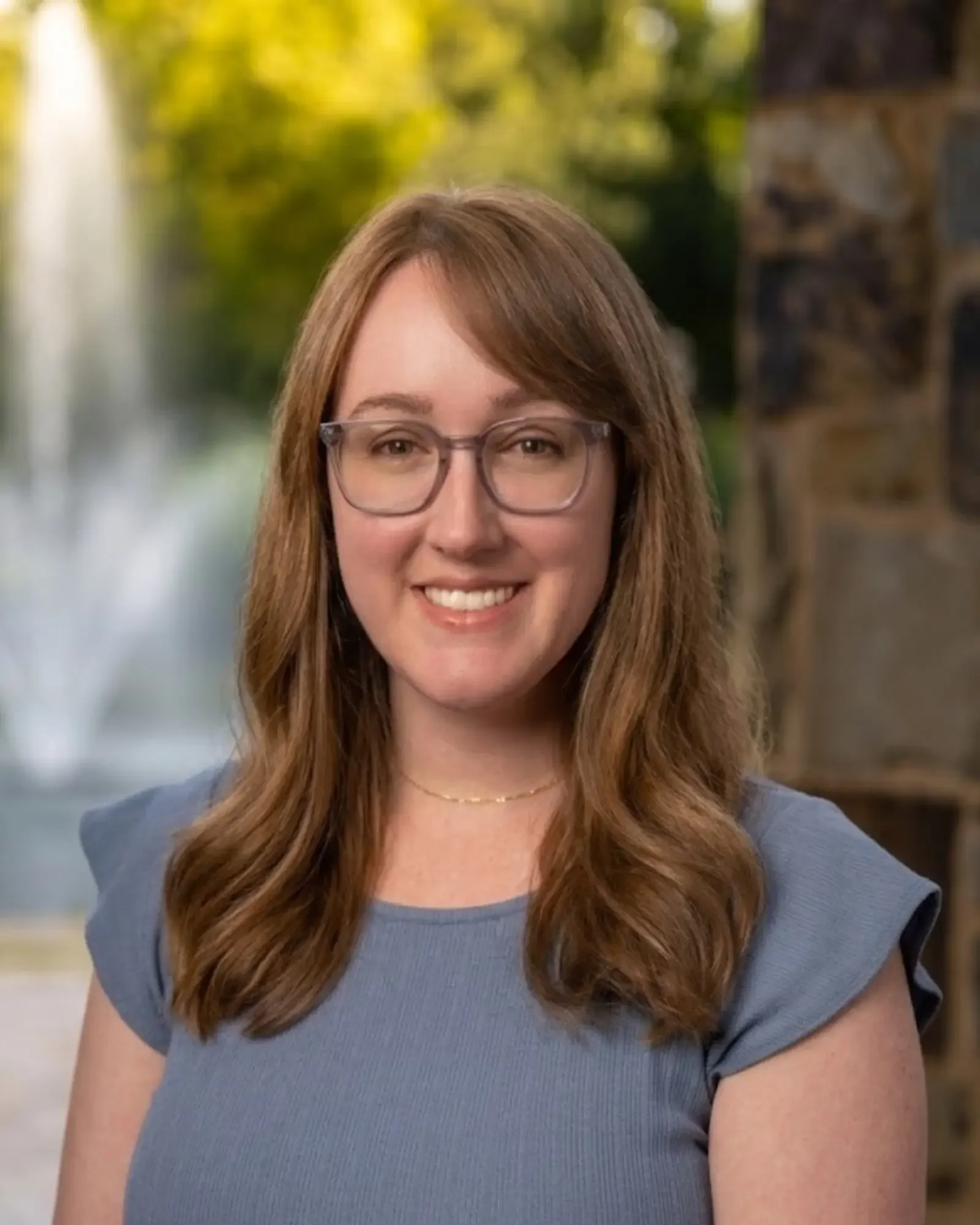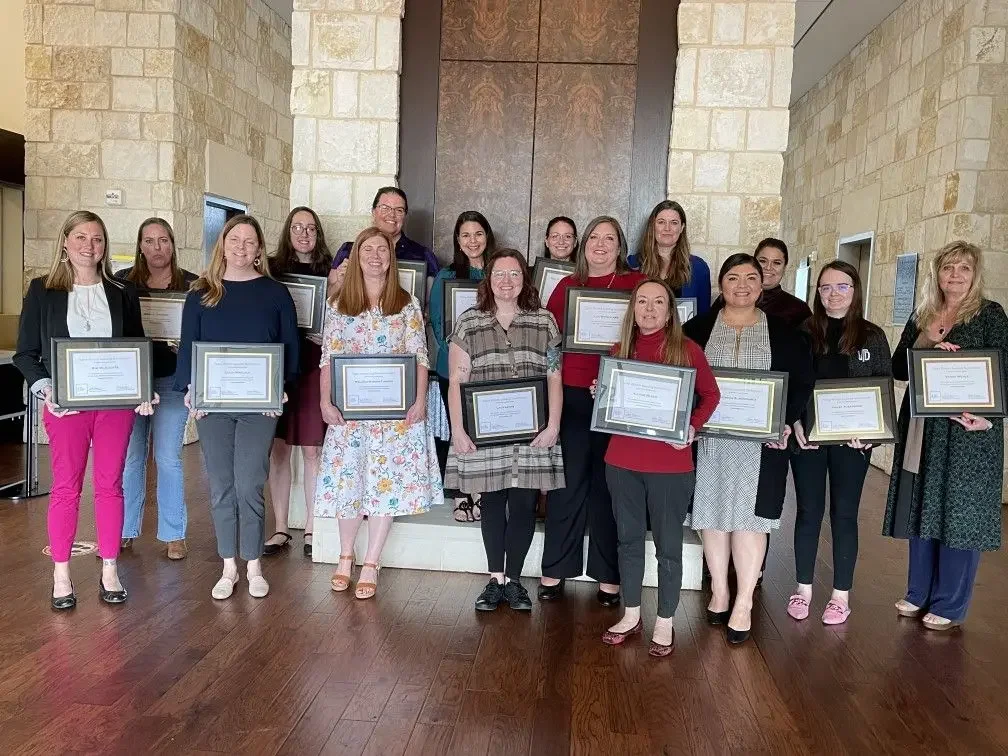
Sarah Luxton and her class from the Texas Women’s Leadership Institute.
In 2022, I made a decision that would fundamentally change the trajectory of my career: I joined the UMANT mentorship program.
At the time, I had already earned my Master of Public Administration and was committed to doing my job well. But I did not have a five- or ten-year career plan. More importantly, I had never seriously considered becoming a City Manager. I simply did not see myself in that role.
My mentor was Ben Williamson, who was then an Assistant City Manager in Farmers Branch and is now the City Manager. From our first conversations, it was obvious that Ben loved the profession. He was enthusiastic, curious, and genuinely interested in talking about local government and leadership. He also had a way of asking questions that made me think differently about myself.
I remember one conversation in particular. Ben asked me, "What is your “why”?"
I suspect he had recently read Simon Sinek's Start with Why, but the question stuck with me. I had never really considered why I was in this profession or how my personal motivations connected to my career goals. That simple question started a process of self-reflection that helped me better understand not only what I wanted to accomplish, but why I wanted to accomplish it.
Then Ben encouraged me to apply for two opportunities: the ICMA Conference Scholarship and the Texas Women's Leadership Institute. I applied and was fortunate enough to be accepted into both. At the time, I had no idea those two experiences were about to change my whole career trajectory.
For the first time, I met City Managers and other leaders whom I could genuinely relate to. They were women and men of different ages, personalities, backgrounds, and leadership styles. Some were parents. Some had taken unconventional career paths. They did not all fit the picture of what I had previously imagined a City Manager looked or acted like.
And that mattered.
Before those experiences, I had unconsciously convinced myself that I did not have the right personality to lead an organization. I thought perhaps City Managers had a certain disposition, a certain presence, or some quality that I simply did not possess.
Meeting these leaders challenged that assumption. I saw women who were raising families while pursuing leadership. I saw people who had not waited for an opportunity to be handed to them. They worked hard, continued learning, built relationships, made difficult decisions, and made a difference in their organizations and communities. They were different from one another and those differences made them stronger (not weaker).
For the first time, I could see myself in the picture. That realization changed my career goals. I began to understand that I did not need to become someone else to be a successful leader. I needed to continue developing into the leader I wanted to be.
In 2022, I wanted to be the best at my job. After 2022, I realized that if I wanted to make the greatest possible impact on organizations and communities, I needed to continue growing, challenge myself, and reach for greater leadership opportunities.
All thanks to the power of mentorship!
More Than Advice
I believe mentorship is often described too narrowly. We talk about mentors as people who transfer knowledge, provide career advice, or make professional introductions. Those things are important, but they are only part of the equation.
The most valuable thing a mentor can give someone is possibility and inspiration!
City management is hard. Leadership is hard. There are books, podcasts, conferences, courses, and countless articles about how to become a better leader. But there is something fundamentally different about sitting across from someone who has actually lived through the situation you are facing.
A mentor can tell you what the textbook cannot. They can tell you about the difficult conversation they had with a Council Member. They can explain how they navigated a challenging personnel issue. They can share a mistake they made and what they would do differently. They can tell you what they wish they had known ten years earlier. Those stories make the lessons stick.
Just as importantly, mentorship creates a safe place to ask difficult questions that you might be hesitant to ask in your organization or of your supervisor.
What Makes a Great Mentor?
My experience has taught me that great mentors share several qualities.
Relevant Experience: A mentor does not have to have the exact same career path as their mentee, but they should have experience that can help the mentee navigate the challenges ahead. The value is not simply in knowing the answer; it is in having lived through the question.
A Willingness to Open Doors: Great mentors have relationships and networks, but they also understand that mentorship is not about handing someone a list of contacts. It is about helping people learn how to build relationships and open doors for themselves.
Emotional Intelligence: Leadership is ultimately about people. A good mentor can read interpersonal dynamics, navigate difficult conversations, and recognize when the issue being discussed is about more than what appears on the surface.
Availability: Even the most experienced leader cannot be an effective mentor without investing time. Mentorship requires consistency and a genuine commitment to another person's development.
A Growth Mindset: Great mentors continue learning themselves. They recognize that the profession is changing and that experience does not make someone immune to learning something new.
And perhaps most importantly, great mentors are willing to challenge you! And that is important because growth often doesn’t occur from a place of comfort. A mentor should not simply tell you what you want to hear. Sometimes the most valuable mentor is the person willing to say, "I think you are capable of more," or "Have you considered looking at this differently?"
What Makes a Great Mentee?
Mentorship is a relationship, and the responsibility for making that relationship successful does not rest solely with the mentor.
Coachable: They are willing to receive feedback, consider a different perspective, and try something new.
Self-Aware: They understand their strengths and weaknesses and can identify areas where they need to grow.
Proactive Ownership: They schedule meetings, bring questions, establish goals, and come prepared. The mentor should not have to do all the work.
Active Listeners: Mentorship is not simply an opportunity to talk about yourself. Listen carefully. Ask questions. Take notes. Think about what you heard.
Follow Through: Last, perhaps most importantly, they follow through. If a mentor offers advice, make an effort to apply it. If they suggest a book, read it. If they recommend a person to meet, make the connection. If you agree to take an action, do it.
The best way to respect someone's investment in you is to demonstrate that you are doing something with it.
Mentorship Does Not End With the Program
The knowledge transfer between generations is critical to the long-term success of our profession. But mentorship is about more than transferring knowledge. It is about transferring perspective, confidence, relationships, and possibility. There is always someone who knows something you do not. There is always someone who has experienced something you have not. And there is always another level of leadership to which you can grow.
As we grow and develop, our participation in these programs will often change over time but a mentorship relationship does not have to end when the formal program ends. In fact, my own experience has made me a believer in continuing to seek out mentors throughout my career.
Today, I am excited to help launch a new mentorship program at the Town of Flower Mound that will help employees develop meaningful mentorship relationships within our organization. I also look forward to signing up for the UMANT mentorship program once more. After all, you never outgrow mentorship. You simply have to be willing to participate!
In 2022, I joined a mentorship program without a clear vision of where my career was headed. I left with a better understanding of my "why" and, more importantly, a new understanding of what might be possible. Ben did not tell me that I needed to become a City Manager. He helped me see that I could and that distinction stayed with me.
If you are reading this and wondering whether you need a mentor, my advice is simple: find one. If you have experience you can share, become one. Find a mentorship program through your professional association, your organization, or your local government network. Get out there and make it happen because sometimes a mentor does not give you the answer. Sometimes they simply help you see a future you could not see for yourself.
And that can change everything!