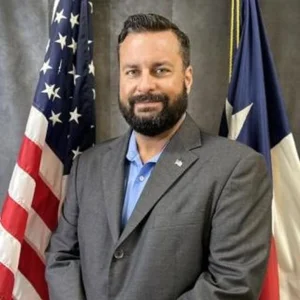
Dr. Don Hooper on thinking with discipline and leading with purpose
The one thing each person fully controls is their own thoughts. That idea runs through this episode of The Clear Voice, where host James Groom and Clear's James Hopper talk with Dr. Don Hooper, author of Power Thinking: Discovering the Unknown by Unlocking Your Brain.
Hooper is president and CEO of the Center for Quality Leadership. He started teaching math before he finished his degree, became a superintendent at 28 in a district of 110 students and finished 25 years as a superintendent at Fort Bend ISD, which had about 60,000 students at the time. Along the way he met quality and systems thinkers including W. Edwards Deming.
Self-control starts with thought control
Hooper's core claim is that self-control is the result of thought control. Leaders choose which thoughts they accept and which they push away, and he warns against taking in other people's ideas without checking them. Hopper connects this to research on self-regulation as a driver of success.
Hooper says the people remembered as great thinkers shared a habit: they observed something and kept thinking about it long after others moved on.
Data-enhanced, not data-driven
Hooper challenges a phrase most leaders use every week. Data, he says, is only a point. Linked together it may become information, verified it may become knowledge, applied it can produce understanding, and from there comes wisdom. "Data is the lowest point on the totem pole," he says.
His alternative is data-enhanced decision making, where the numbers inform judgment. Hopper adds that data rarely gives answers, but it does lead to better questions.
Purpose is the big why
Hooper describes purpose as something a person lives and never finishes. Knowing the why behind a decision is how a leader tests whether it is worth doing. When actions and purpose drift apart, his first check is patience: listening and thinking before responding in a world that rewards a fast reply.
What makes a thought leader
A real thought leader, Hooper says, has put in the time and discipline to go deep on a subject and then shares it, saving other people the hours. He ties that to coaching, which he describes as asking a question more often than telling someone what to do.
Habits that build new pathways
His daily practice is simple: write it down. A dull pencil, he jokes, beats the sharpest memory. Repetition is what strengthens a neural pathway, and he says the brain can keep forming new ones at any age. He also reminds leaders to look after the body that carries the brain.
Listen at every level, then build the culture
As a superintendent Hooper formed an executive steering team that pulled in people from every level, because a custodian may see what the cabinet cannot. "The first role of leadership is to create a winning system for people," he says.
He describes culture as rituals, rewards, totems and taboos. Arriving in a new district, he asked every principal three things: what should I know about you, what should the superintendent hear, and where is the quicksand?
Practices leaders can use this week
Write down what matters and revisit it until it becomes routine.
Treat data as an input to judgment and ask what question it raises.
Before a decision, state the purpose behind it in one sentence.
Ask frontline employees what leadership is not hearing.
When starting a new role, ask where the quicksand is before changing anything.
Episode chapters
- 00:00Introduction and Dr. Don Hooper's background
- 01:40From math teacher to superintendent
- 04:06Why he wrote Power Thinking
- 06:13How the brain shapes decisions
- 08:44Thought control and self-control
- 12:18Data-driven or data-enhanced decisions
- 15:12Purpose as the big why
- 17:39What makes a true thought leader
- 20:04Daily practices and neural pathways
- 23:10Neuroplasticity and PTSD research
- 25:45Listening at every level of the organization
- 29:08Culture: rituals, rewards, totems and taboos
- 31:21Where to find the book and Dr. Hooper
- 32:55Advice for aspiring leaders
Questions this episode answers
What is Power Thinking?
It is Dr. Don Hooper's term for a disciplined approach to thinking: choosing what to think about, controlling which thoughts you accept and staying with a problem long enough to understand it. He presents it as a skill anyone can build with practice.
What is the difference between data-driven and data-enhanced decisions?
Hooper says data alone is the lowest rung of a ladder that runs through information, knowledge and understanding to wisdom. In a data-enhanced decision, the numbers support a leader's judgment and do not replace it.
How can leaders improve their decision making?
Hooper recommends writing things down, repeating the habits you want to keep, asking better questions, listening to people at every level and practicing patience before responding.
How does a new leader change an organization's culture?
By listening first. Hooper learns what people value and what to avoid, then changes daily routines and recognizes success along the way so that new traditions form with the team's involvement.
Learn more from Dr. Don Hooper
Power Thinking: Discovering the Unknown by Unlocking Your Brain, by Dr. Don Hooper
As an Amazon Associate, Clear Career Professionals earns from qualifying purchases.
Watch the episode
Watch Power Thinking, Purpose and Leadership with Dr. Don Hooper on YouTube
The Clear Voice is also on Apple Podcasts, Spotify and every major podcast platform. See all episodes of The Clear Voice.
More from Clear
Clear Career Professionals helps local governments with executive recruiting, interim leadership and organizational assessments. See all Clear services.
About The Clear Voice Podcast
The Clear Voice is a dedicated platform for transparency and expert led dialogue within the professional and public sectors. The show serves as a vital resource for leaders who want to move past surface level discussions and dive into the real world mechanics of governance, management, and organizational growth. James Groom is the host of the program.
About Clear Career Professionals
Clear Career Professionals is a specialized recruitment and strategic consulting firm focused on the public sector. We believe that the strength of any municipality or school district lies in the quality of its leadership and the cohesion of its teams. Our team is comprised of former practitioners and retired executives who understand the nuances of public service. We provide organizations with more than just a list of candidates; we provide the strategic oversight and expertise necessary to navigate transitions, maximize taxpayer funds, and implement long term solutions.
Connect With Us
Visit our official website to explore current job opportunities or to learn more about our leadership services: clearcareerpro.com.
Follow us for more updates:
Career Opportunities: https://clearcareerpro.com/career-opportunities/
Recruitment Services: https://clearcareerpro.com/recruiting
Services: https://clearcareerpro.com/all-services/
Clear News:https://clearcareerpro.com/clear-news
The Clear Voice Podcast: https://clearcareerpro.com/the-clear-voice/
LinkedIn: https://linkedin.com/company/clear-career-pro
Facebook:Clear Career Professionals @ClearCareerPro