Why Command Staff Should Care About the Cognitive Interview
In law enforcement, we spend enormous amounts of time discussing use of force, officer safety, staffing shortages, retention, and public perception. Yet one of the most overlooked areas of organizational liability and operational effectiveness continues to happen quietly inside interview rooms every single day.
The quality of our interviews.
Most agencies still evaluate interviews based on one question: “Did we get a confession?”
That is the wrong standard.
A successful interview is not measured by pressure, intimidation, or whether someone eventually agrees with us. It is measured by the quality, accuracy, and defensibility of the information obtained.
And that distinction matters more now than ever.
Modern law enforcement agencies are operating under increased scrutiny from courts, juries, prosecutors, defense attorneys, media, and the public. Poor interviewing practices no longer stay hidden inside a case file. They become civil liability issues, credibility issues, retention issues, and public trust issues.
The agencies that fail to evolve will eventually pay for it.
The Problem with Traditional Interview Training
Many officers were taught interviewing techniques decades ago that relied heavily on accusation-based tactics, psychological pressure, or rigid behavioral assumptions.
The problem is simple:
People do not behave the same under stress.
Trauma, fear, exhaustion, cognitive overload, neurodivergence, mental health issues, and cultural differences all affect memory retrieval and communication. Yet many investigators still interpret nervousness, inconsistencies, or delayed recall as indicators of deception.
This creates operational risk.
When interviewers interrupt witnesses, feed details unintentionally, ask leading questions, or rush toward confirmation rather than information gathering, memory contamination occurs. Once contaminated, information becomes difficult to defend in court and difficult to separate from suggestion.
That is where the Cognitive Interview becomes critical.
We Have Overfocused on Suspect Interviews and Undertrained Witness Interviews
One of the biggest misconceptions in law enforcement is that interview training primarily exists for suspect interrogations.
In reality, the overwhelming majority of interviews conducted by police officers involve victims, witnesses, complainants, and reporting parties — not suspects.
Every patrol shift includes:
Domestic violence calls
Assault reports
Theft reports
Traffic crashes
Child disclosures
Disturbance calls
Witness canvasses
Crisis interactions
Preliminary investigations
In nearly all of these situations, the officer’s primary responsibility is not interrogation — it is information gathering.
Yet law enforcement culture often places disproportionate emphasis on suspect interviews while spending far less time teaching officers how to properly interview victims and witnesses.
That imbalance creates operational risk.
The Cognitive Interview was never originally designed as a confession-based interrogation system. It was developed to improve witness and victim memory retrieval using research grounded in cognitive psychology and human memory science.
Research conducted by Ronald Fisher and R. Edward Geiselman demonstrated that Cognitive Interview techniques consistently produced significantly more accurate witness information compared to standard police interviews, with studies showing approximately 30–45% more correct information recalled without a corresponding increase in inaccuracies.
That matters because most officers are not conducting homicide interrogations every day.
But they are conducting witness and victim interviews every single shift.
And patrol officers often perform the most important interview in the entire investigation.
The initial responding officer frequently captures:
The freshest memory
The least contaminated narrative
The most emotionally authentic account investigators may ever receive
Once memory contamination occurs through interruptions, leading questions, repeated questioning, outside influence, or poor interviewing practices, portions of that information may never be fully recovered.
This becomes especially critical when interviewing:
Children
Trauma victims
Elderly witnesses
Individuals in crisis
Neurodivergent individuals
Highly emotional complainants
Unfortunately, many officers receive little formal instruction on how trauma, stress, cognitive overload, and memory retrieval affect communication.
Instead, agencies often rely on outdated habits or informal interviewing practices passed down from officer to officer.
The result is predictable:
Interrupting witnesses too early
Overusing closed-ended questions
Filling silence unnecessarily
Leading witnesses unintentionally
Rushing narratives
Seeking confirmation instead of clarification
Missing critical details hidden within free narrative recall
These are not merely communication mistakes. They are investigative vulnerabilities.
For command staff, this should not be viewed as a niche detective-training issue. It should be viewed as a patrol competency issue, a leadership issue, and a liability-management issue.
Poor victim and witness interviews can directly affect:
Case solvability
Victim satisfaction
Public trust
Jury perception
Officer credibility
Modern policing requires officers who understand not only criminal behavior, but also human memory, stress responses, trauma, and communication under pressure.
That training should not begin in specialized investigative units.
It should begin in patrol.
What the Cognitive Interview Actually Is
The Cognitive Interview is a research-based interviewing methodology designed to improve memory retrieval while reducing contamination and interviewer influence.
At its core, the Cognitive Interview is built around a simple principle:
People remember more when they feel psychologically safe, cognitively engaged, and uninterrupted.
Rather than relying on confrontation, the interviewer focuses on facilitating accurate recall through structured communication techniques designed around how human memory actually works.
This includes:
Context reinstatement
Open-ended questioning
Narrative-based recall
Strategic silence
Multiple retrieval pathways
Clarification without contamination
Enhanced listening and observation skills
The goal is not manipulation.
The goal is accuracy.
That distinction is important for command staff because accurate information creates stronger investigations, stronger prosecutions, fewer complaints, and greater organizational credibility.
Why This Matters to Agency Leadership
For command staff, this is not simply a training issue. It is a leadership issue.
Poor interviews create downstream organizational problems that leadership eventually inherits.
These include:
Brady/Giglio credibility concerns
Suppression issues
Civil litigation exposure
Claims of coercion
Public trust erosion
Increased case review scrutiny
Weak prosecutorial outcomes
False confession allegations
Internal affairs complications
Damaged community perception
Additionally, poorly trained interviewers often create investigative tunnel vision. Once investigators emotionally commit to a theory, they begin seeking confirmation instead of information.
That is where agencies become vulnerable.
The Cognitive Interview helps reduce that vulnerability by teaching investigators to remain information-focused rather than ego-focused.
Better Interviews Improve More Than Investigations
One of the biggest misconceptions about interview training is believing it only applies to detectives.
In reality, these skills improve communication agency-wide.
Officers conduct interviews constantly:
Patrol interviews
Witness interviews
Victim interviews
Use-of-force statements
Internal investigations
Background investigations
Supervisory inquiries
Crisis negotiations
Community interactions
Every one of those interactions affects liability, trust, and organizational effectiveness. Agencies that invest in modern interviewing instruction are not simply improving investigations. They are improving communication culture.
And communication culture directly affects leadership culture.
The Future of Investigative Interviewing
Law enforcement has evolved in many areas over the last twenty years. Defensive tactics evolved. Active shooter response evolved. Crisis intervention evolved.
Interviewing must evolve as well.
The agencies that continue relying on outdated assumptions about behavior, deception, and pressure-based interviewing will increasingly find themselves at odds with modern juries, modern prosecutors, and modern expectations.
Today’s investigators must understand not only criminal behavior—but human cognition, trauma, stress, and memory retrieval.
That requires training.
More importantly, it requires leadership willing to prioritize it. Because ultimately, the quality of an investigation often depends on the quality of the conversation.
And the quality of the conversation depends on whether we truly know how to interview.
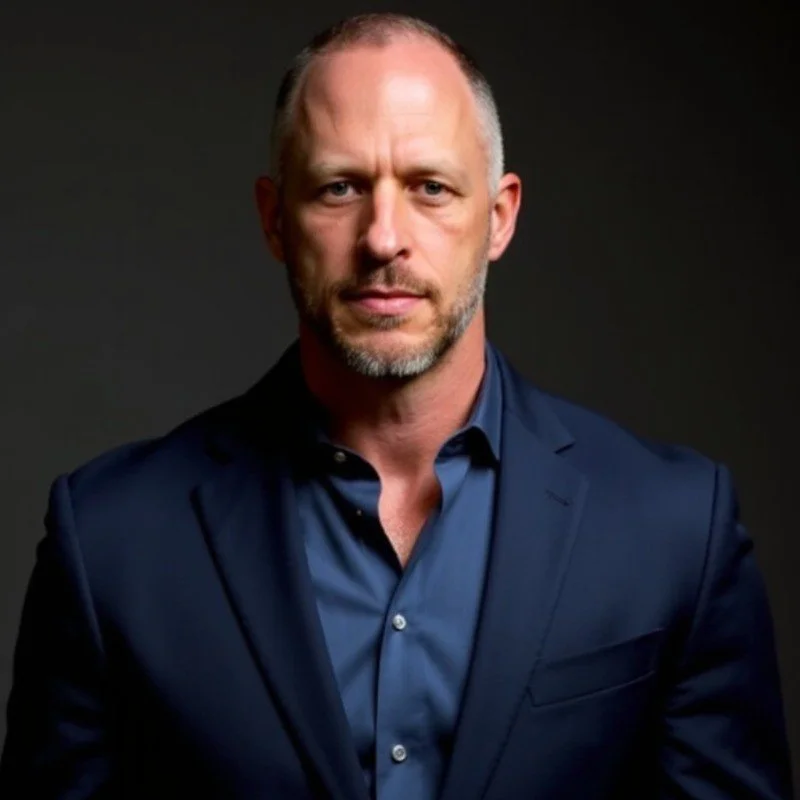
Contact Justin
Justin can be contacted through his website or his LinkedIn Profile. Additionally, you can find Justin’s best selling book, How to Get to the Damn Point, on Amazon.