Addressing the Strain Before It Becomes a Cost
Early awareness, not after the fact response, is the next step in public safety wellness, and using technology in a responsible way is a cost-effective solution.
A city's most valuable public safety asset isn't its vehicles or its facilities. It’s the people whom the community has invested years and significant public dollars to recruit, hire, train, and field. When a team member walks out early, burns out, or makes a costly mistake under accumulated strain, the bill lands in several places at once: backfill overtime, workers' compensation, disability, litigation exposure, and the slow erosion of the organization’s experience, morale, and legitimacy.
The strain itself is not a character flaw or a personnel problem. It's an occupational reality. Shift work disrupts sleep and recovery. Trauma exposure accumulates. Hypervigilance doesn't switch off at the end of a shift. Over a career, these pressures are predictable, and yet most agencies only learn that a given person has reached their limit when it surfaces as a resignation letter, a use-of-force review, a leave request, or a crisis. By then, the least expensive and most humane window to help has usually already closed.
The strategies most cities rely on are not wrong, but they are insufficient on their own. Employee assistance programs and annual screenings are episodic and reactive; they wait for the person to raise a hand in a culture built to discourage exactly that. One-day resilience training rarely persists through a year of night shifts. Peer support is valuable but informal and invisible to leadership, dependent on the right person noticing at the right moment. Wearables handed out as a perk produce data with no context and no path to action. The common thread is that these are point solutions, and they place the burden of noticing trouble on the individual least equipped to carry it. Leadership, meanwhile, has no reliable way to see strain building across a shift or a unit until it has already been converted into attrition or an incident.
Why early awareness and real-time support matter
Strain leaves a trail before it becomes a crisis. Degrading sleep, declining recovery, or a shift of back-to-back high-acuity calls are all observable signals that tend to precede a visible outcome by weeks or months. When that trail is invisible, the first time anyone acts is after the damage is done. When it's visible early, support can arrive as a nudge: a sleep adjustment, a check-in, a conversation instead of an emergency intervention or an exit interview.
For leaders, there is a defensibility dimension as well. A decision made with awareness of the load a unit is carrying is a fundamentally stronger position than one reconstructed after the fact. "We could see this team's exposure was climbing, and we acted on it" is not the same as explaining, in hindsight, why no one knew.
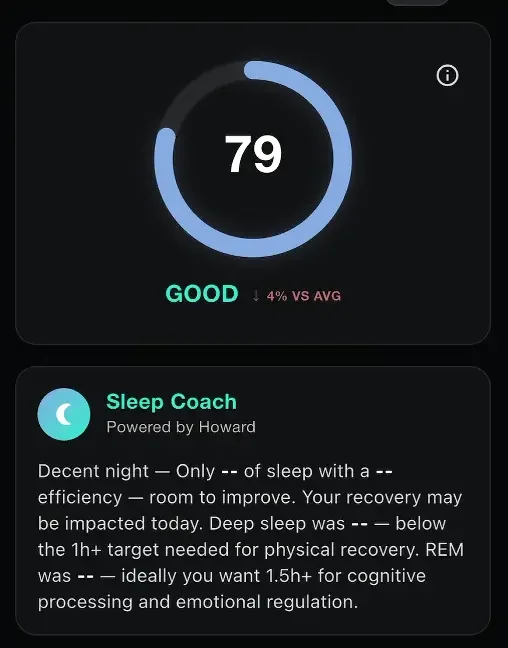
Sleep coach screen
Using data and technology responsibly
The instinct to be cautious here is the correct one. The same tools that can support people can, when used poorly, feel like surveillance, and nothing erodes trust within a workforce or a labor association faster. Doing this well depends on a few non-negotiable principles.
Individual data belongs to the individual. An officer's biometric detail is theirs; it should never become a feed into a performance file or a disciplinary process. Their data remains confidential to them, unless they choose to share it.
Leadership, in turn, should see the forest, not the tree. Aggregated, anonymized, population-level visibility into which units are carrying the heaviest load and where readiness is trending down is the idea behind a health dashboard.
Consent and transparency come first: people should know what is collected, why, and just as importantly, what it will never be used for. The framing has to be wellness rather than monitoring, and the system has to be built so that framing is actually true, not merely stated. For public agencies, the underlying security should meet government standards.
Drawn correctly, the line between support and surveillance is the difference between a tool people opt into and one they quietly route around.
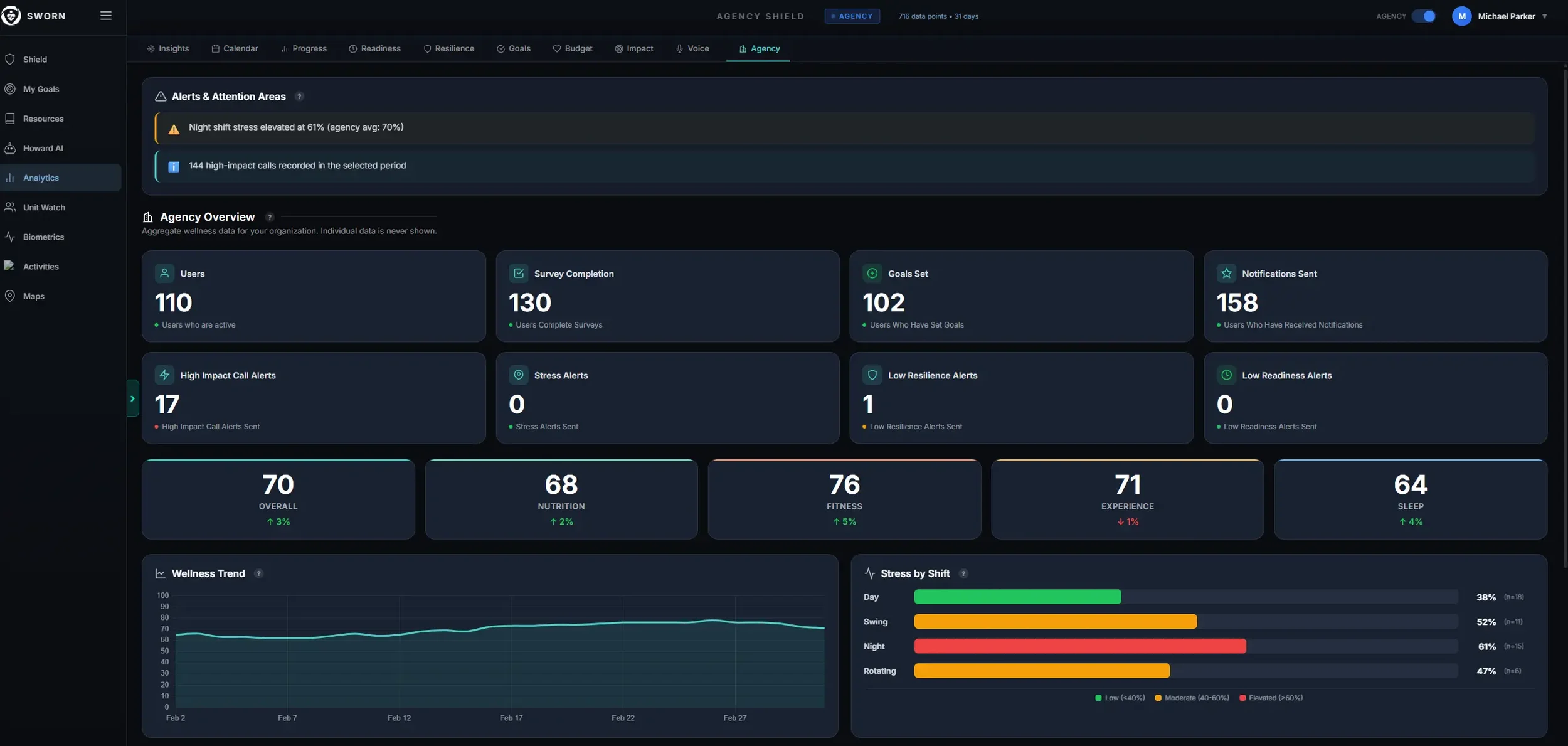
Dashboard showing the anonymized Agency View for SWORN.ai
What this can look like in practice: SWORN.ai
SWORN is a wellness and readiness platform built specifically for public safety. It is organized around exactly the privacy line described above, in two layers.
Howard
Howard is the employee-facing side designed for the individual. It is first and foremost confidential. It connects to a biometric wearable device the employee already uses, surfaces personal insights, and offers coaching. The data and the relationship belong to the individual. The AI is there to alert the user to a potential issue and provide information and connections to resources that can help the user address the issue before it is too late.
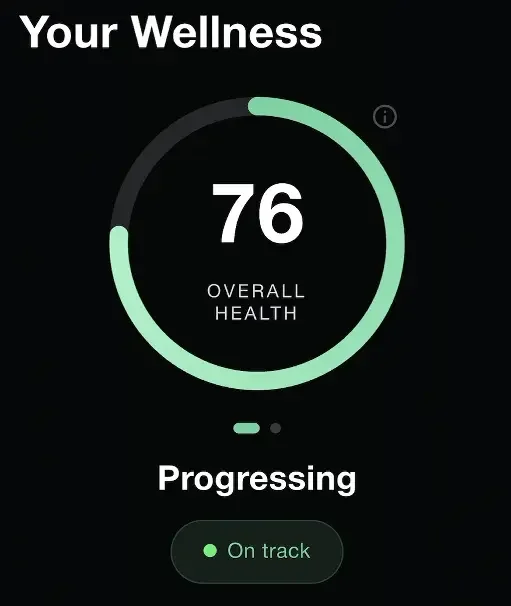
Real-time health screen
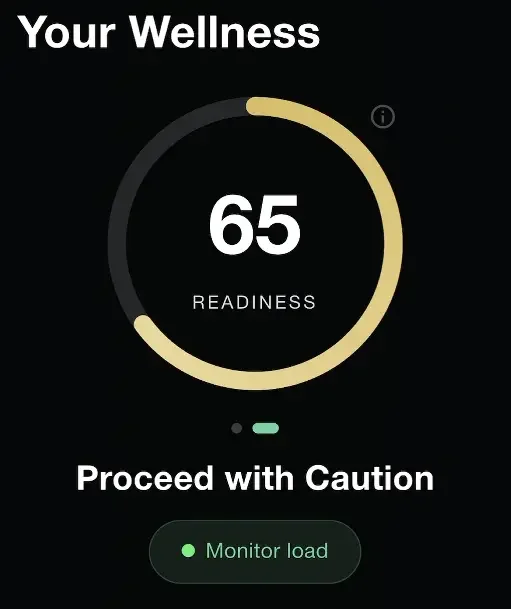
Real-time readiness screen
Shield
Shield is the agency side: aggregated and anonymized analytics for leadership. It produces composite readiness scores at the population level and shows where operational load is concentrating. By integrating with workload data, it folds in the stress people actually experience, so the picture reflects real operational exposure. It allows the agency to upload its current wellness resources and programs, so that its employees get directed to the resources the agency trusts.
What distinguishes the approach is that it pairs biometric signals with operational reality, while keeping individuals in possession of their own data and giving leadership only the aggregate view. The value for leadership is best described as visibility and continuity: a continuous, honest view of how the workforce is doing, and a path to support that does not depend on someone in crisis raising a hand.
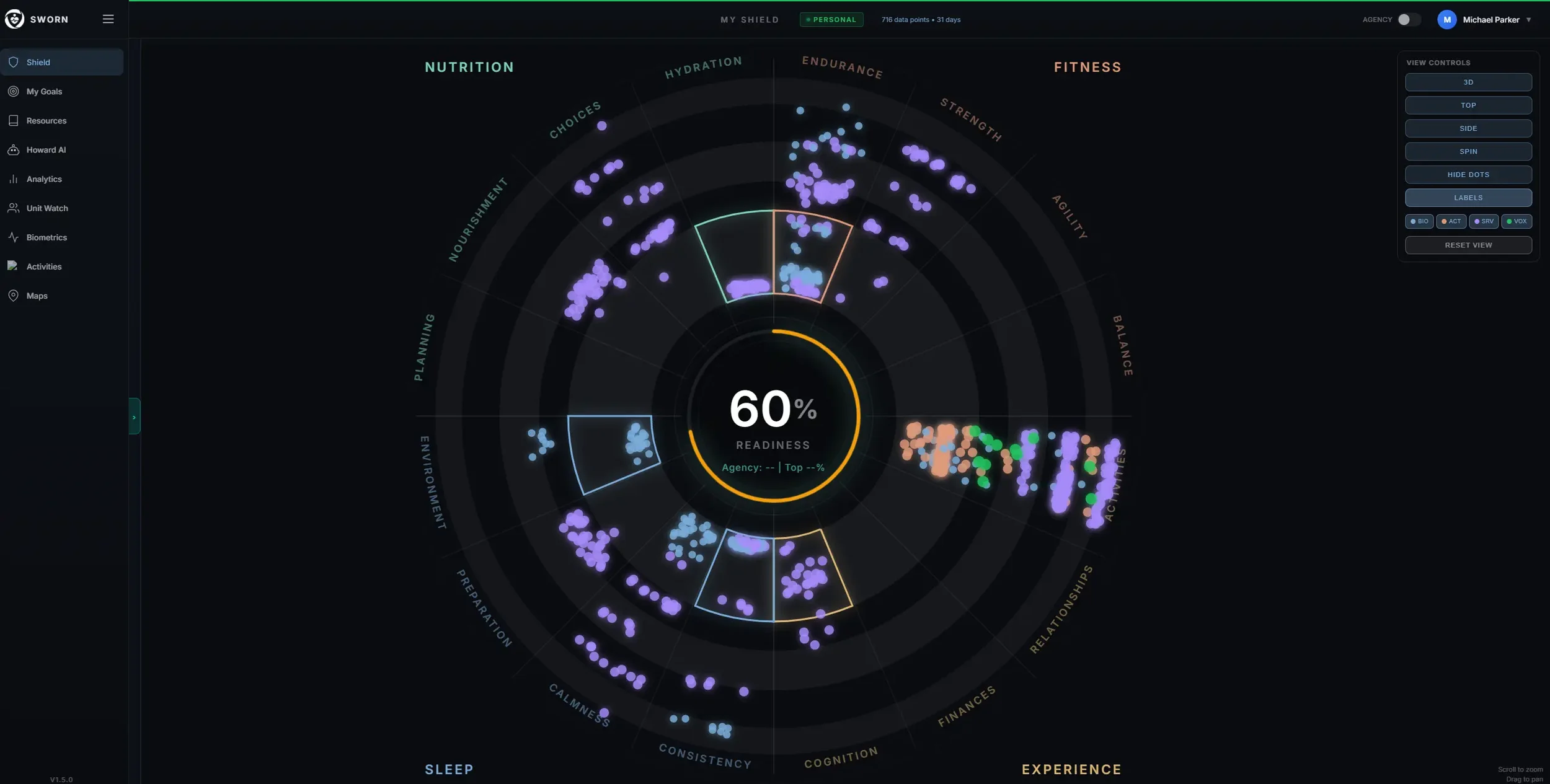
Shield User Data View
A practical takeaway for chiefs, city managers, and public safety leaders
The first question is not "what should we buy?" It is simpler and more revealing: right now, before a resignation or an incident, what can our agency actually see about how our people are doing? For most departments, the honest answer is very little and only after the fact.
From there, a few practical steps follow. Treat wellness as operational infrastructure rather than a perk or a compliance checkbox; it protects the readiness of the workforce the same way fleet maintenance protects the vehicles. When evaluating any tool, ask the trust questions first: who owns the individual data, what can command see, what can it never be used for, and how is it secured.
The job will stay hard; that is not within anyone's power to change. What a city can control is whether its people are supported before the strain becomes a cost, human or fiscal, that everyone ends up paying.
For more information about SWORN.ai or to schedule a demo:
Jeff Spivey
Vice President of Business Development
Email:jeff@sworn.ai
Phone: 817-372-4124