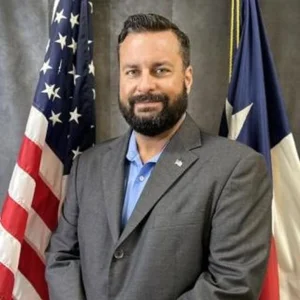
Craig Kerkhoff on the infrastructure problems cities do not see coming
Infrastructure problems rarely start the day a pipe breaks or a road fails. In this episode of The Clear Voice, host James Groom and Clear President Michael Boese talk with municipal engineer Craig Kerkhoff, Managing Partner at BHC, about what engineers see that city leaders often cannot.
Kerkhoff has more than 20 years in engineering and about 17 with BHC, a firm that has served the public sector for 57 years, almost entirely municipalities and mostly in North Texas. He says working only for cities keeps the firm out of the conflict that comes when one engineer advises a city while a colleague negotiates for a developer.
Small cities often do not know what they have
Smaller cities have fewer people wearing more hats, and nothing seems broken until growth arrives. Kerkhoff says many learn about their deficiencies in the middle of a development agreement: a treatment plant near its permitted capacity, inflow and infiltration in the sewer system, an undersized lift station or too little elevated storage.
Larger cities usually know their systems better. Their challenge is the number of layers a decision has to pass through, which makes it harder to build the kind of relationship where a new approach can be talked through.
Presenting to a council that changes every two years
Kerkhoff attends the council meeting himself whenever his work is on the agenda. A city manager has only so much political capital, and he does not want it spent answering engineering questions. He explains why he is there, what the council is being asked to vote on and what the city can do if conditions change later.
Not every item is a construction project. Impact fee reports and water and sewer master plans are planning and financing tools, and he says councils make better decisions when they know what they will get out of them.
When the council decides against the recommendation
Kerkhoff tells the story of a politically sensitive road project that drew a single bidder. He recommended against the contractor, the council voted to proceed and construction was as painful as expected. Years later, new staff wrote to ask why the road was built that way.
His approach is to give the best information he can and then support the decision, because the council is the elected body. "You're not painting my name on the water tower," he says. The one hard stop is a decision that is illegal or puts health, safety or welfare at risk.
Grants are not a plan
Grant programs such as those run through the Texas Water Development Board are the only path to major repairs for some small cities. Kerkhoff says they are heavy on paperwork, slow and more expensive to administer, and that most pay to fix existing deficiencies, not to serve growth.
Boese adds that grants are not a strategic plan. Both recommend building a capital improvement plan the city can fund without a grant, then treating any award as a bonus.
Why water rates rarely go down
Kerkhoff says a utility fund has to pay for itself, and cities get into trouble when the general fund keeps covering it. New water supply, treatment plants and transmission lines are expensive, and he points to Proposition 4, which he describes as a billion dollars a year for 20 years for water infrastructure in Texas. His advice is a rate study, so the city can show residents what the service costs.
What city leaders can do now
Map and assess the existing water, sewer and street systems before growth arrives.
Keep water and sewer master plans and impact fee studies current.
Commission a rate study so utility rates reflect the real cost of service.
Fund the capital improvement plan without counting on grants.
Ask the engineer what the council is voting on and what happens if conditions change.
Episode chapters
- 00:00Introduction to municipal engineering and infrastructure
- 03:01Craig Kerkhoff's path into engineering
- 04:33BHC and its focus on municipalities
- 06:25Building relationships with cities
- 09:50Common infrastructure challenges for cities
- 11:49Infrastructure issues in smaller and larger cities
- 18:51Leadership and municipal decision making
- 27:06Funding infrastructure with grants and financial planning
- 31:40Final thoughts on leadership and infrastructure
Questions this episode answers
Why do city infrastructure projects run into surprise costs?
Kerkhoff says crews regularly find things underground that nobody knew were there, especially on a small city's first major project. The engineering and due diligence can be sound and the surprise still appears once construction begins.
Should a city rely on grants to pay for infrastructure?
No. Kerkhoff and Boese both say to pursue grants but to build the funding plan without them. Grant timelines are slow, the administration adds cost and most programs do not pay for growth.
Can a city lower its water rates?
Rarely. Kerkhoff says the cost of water supply and treatment keeps rising and the utility fund needs to cover its own costs. A rate study shows what the city has to charge.
What should a council expect from its city engineer?
A clear explanation of why an item is on the agenda, what the vote does, what it will cost and what options the city has if things change. Kerkhoff sees his role as giving recommendations, with the decision belonging to the council.
Learn more about BHC
BHC, municipal engineering for Texas cities
Watch the episode
Watch What Engineers Wish City Leaders Knew with Craig Kerkhoff on YouTube
The Clear Voice is also on Apple Podcasts, Spotify and every major podcast platform. See all episodes of The Clear Voice.
More from Clear
Clear Career Professionals helps local governments with executive recruiting, interim leadership and organizational assessments. See all Clear services.
About The Clear Voice Podcast
The Clear Voice is a dedicated platform for transparency and expert led dialogue within the professional and public sectors. The show serves as a vital resource for leaders who want to move past surface level discussions and dive into the real world mechanics of governance, management, and organizational growth. James Groom is the host of the program.
About Clear Career Professionals
Clear Career Professionals is a specialized recruitment and strategic consulting firm focused on the public sector. We believe that the strength of any municipality or school district lies in the quality of its leadership and the cohesion of its teams. Our team is comprised of former practitioners and retired executives who understand the nuances of public service. We provide organizations with more than just a list of candidates; we provide the strategic oversight and expertise necessary to navigate transitions, maximize taxpayer funds, and implement long term solutions.
Connect With Us
Visit our official website to explore current job opportunities or to learn more about our leadership services: clearcareerpro.com.
Follow us for more updates:
Career Opportunities: https://clearcareerpro.com/career-opportunities/
Recruitment Services: https://clearcareerpro.com/recruiting
Services: https://clearcareerpro.com/all-services/
Clear News:https://clearcareerpro.com/clear-news
The Clear Voice Podcast: https://clearcareerpro.com/the-clear-voice/
LinkedIn: https://linkedin.com/company/clear-career-pro
Facebook:Clear Career Professionals @ClearCareerPro